Get Full Government Meeting Transcripts, Videos, & Alerts Forever!
Get email alerts on the Biomarker Testing topic
No spam. Unsubscribe anytime.
Ohio Health Panel Hears Personal Stories and Cost Data as It Considers Mandated Coverage for Biomarker Tests
Summary
At a second hearing on House Bill 8, clinicians, patient advocates and industry groups urged the Ohio House Health Committee to require state-regulated plans and Medicaid to cover guideline‑indicated biomarker testing, citing patient stories, clinical benefit and actuarial analyses of modest premium impact.
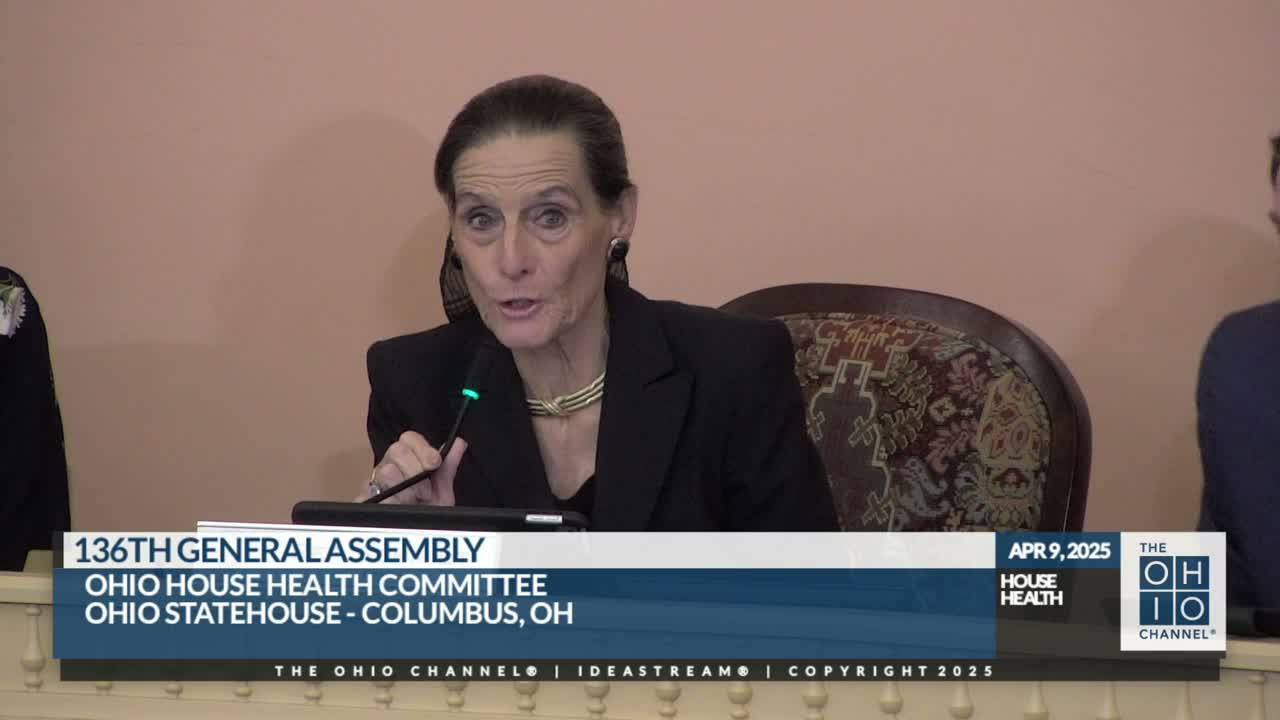
The Ohio House Health Committee heard hours of testimony supporting House Bill 8 on biomarker testing coverage, with doctors, survivors and industry representatives telling personal stories and offering data they say show the tests improve treatment selection and can lower downstream costs.
Supporters described cases in which biomarker testing changed treatment and outcomes. Reagan Mammott, an assistant professor and thoracic medical oncologist at The Ohio State University Comprehensive Cancer Center — James, said biomarker testing “determines the best treatment for a person's cancer” and recounted a patient with an ALK driver mutation who avoided ineffective immunotherapy and saw “nearly complete resolution of his cancer” within two months after targeted therapy.
Proponents framed the bill as narrowly targeted to guideline‑indicated use. Leo Almeida, government relations director for the American Cancer Society Cancer Action Network, told the committee the bill “assures Ohioans covered by Medicaid and state regulated insurance plans have coverage for biomarker testing when medically appropriate.” He referenced a Milliman actuarial analysis that estimates a commercial premium impact of roughly $0.14–$0.51 per member per month and a Medicaid impact of about $0.05–$0.09 per member per month; he also cited an average insurer cost per test of about $224 and out‑of‑pocket patient costs that can range from several hundred dollars to more than $10,000 depending on the test.
Witnesses from the Ohio Nurses Association, Ohio Life Sciences and several patient advocates described the potential for biomarker testing beyond oncology — including psychiatry and rheumatology — to reduce trial‑and‑error prescribing and unnecessary procedures. Kelly Hykes, director of government relations for the Ohio Nurses Association, said biomarker approaches “move towards more precise, personalized medicine” and called coverage “a matter of equity.”
Members pressed witnesses on implementation, cost and scope. Representatives questioned whether some insurers already cover tests, whether single‑gene tests or comprehensive panels are the most efficient approach, and how the bill would affect small employers. Sponsor and proponents repeatedly noted the bill includes “guardrails” requiring tests be supported by medical evidence and that it applies only to state‑regulated plans and Medicaid; witnesses acknowledged federal ERISA rules may leave a coverage gap for some employer plans and cited a committee estimate that a portion of Ohioans (cited during the hearing as about 12%) would not be affected because of ERISA preemption.
Proponents emphasized potential downstream savings. The oncologist and several advocates said timely testing can avoid ineffective and costly treatments — for example, by identifying patients who will not benefit from immunotherapy — and restore working capacity for patients who otherwise may go on disability. Leo Almeida said the Milliman analysis did not include the cost avoidance from more‑effective treatment, which proponents say is an important part of the calculus.
The committee did not take a vote at the hearing. Members asked witnesses to provide additional cost comparisons — for example, average patient out‑of‑pocket costs for common imaging or procedures — and sponsors said they would follow up with supplemental materials. The committee was scheduled to meet next the week of April 28.
Ending note: House Bill 8 received broad testimony but no formal action during the session; sponsors and advocates said they would return more data to the committee.