Get Full Government Meeting Transcripts, Videos, & Alerts Forever!
Get email alerts on the Comprehensive Planning topic
No spam. Unsubscribe anytime.
Fort Thomas planning commission refines comprehensive plan language, flags scope and staffing limits
Summary
The Fort Thomas Planning Commission reviewed and suggested edits to the draft comprehensive plan, focusing on defining the "greenbelt," limiting sub-area detail in the comp plan, and updating references to the UDO; staff said signage/wayfinding work will continue but was delayed by a lost staffer.
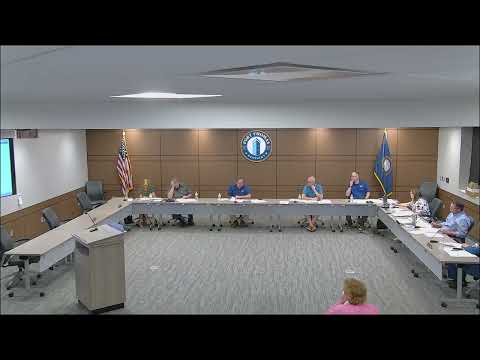
Commissioners on the Fort Thomas Planning Commission reviewed proposed edits to the city—omprehensive plan and debated which items belong in a community-level comp plan versus separate focus-area work.
The discussion centered on several wording and scope changes that commissioners said need clearer definition or should be moved out of the comp plan. Speaker 1 (Commissioner) asked for a concrete definition of the document—ntry labeled "greenbelt," arguing the plan should explain whether that term means a formal conservation zone or simply vegetated and forested slopes. "We don't really have a conservation zone," Speaker 1 said, and recommended referencing the city's Unified Development Ordinance (UDO) instead of inventing new local categories.
Why it matters: commissioners said unclear terms could create expectations that the Planning Commission or council cannot meet without further legal or zoning changes. Several speakers cautioned the plan contains items that are typically council-level policy (for example, specific tax-abatement programs) and recommended leaving program-level incentives to council direction while the Planning Commission focuses on land use and statutory duties under Kentucky Revised Statutes.
Staff updates and implementation limits: A city staff member (Speaker 2) told the commission the branding and wayfinding program is ongoing but multiyear: "We actually have signs going in this year," Speaker 2 said, and noted what had been conceived as a three-year rollout has been expanded to "4 or 5 years" after the departure of a staffer who had led much of the work. Commissioners discussed softening language around economic-development incentives to avoid implying the Planning Commission or staff will implement tax abatement programs.
Transportation and infrastructure language: Commissioners questioned several transportation references in the draft, including a James Avenue-Highland connection that residents previously opposed. Speaker 2 said recent amenity improvements (pickleball courts, disc golf) have reduced the need for some proposed connections, and recommended phrasing that emphasizes coordination with adjacent jurisdictions and agencies rather than prescriptive construction commitments.
Next steps: Commissioners agreed to keep high-level goals in the comp plan while moving detailed sub-area or focus-area recommendations into separate planning products if desired. "Ultimately, we recommend it to council and then they adopt it," Speaker 1 said, noting the Planning Commission's role in recommending but not adopting policy. The commission invited further staff edits and public input before finalizing recommendations to council.
The meeting moved to public comment after the review; no formal land-use actions or votes on plan adoption were taken during this session.