Get Full Government Meeting Transcripts, Videos, & Alerts Forever!
Get email alerts on the School Transportation topic
No spam. Unsubscribe anytime.
Bus drivers press board on safety as SFUSD approves small pilot rideshare contract
Summary
Bus drivers and unions urged the board to keep yellow school buses and oppose replacing them with nonconforming white vans; the board approved a limited contract for a vetted rideshare service (referred to as Zoom/shoestrings) for small, specialized transports as part of the consent calendar.
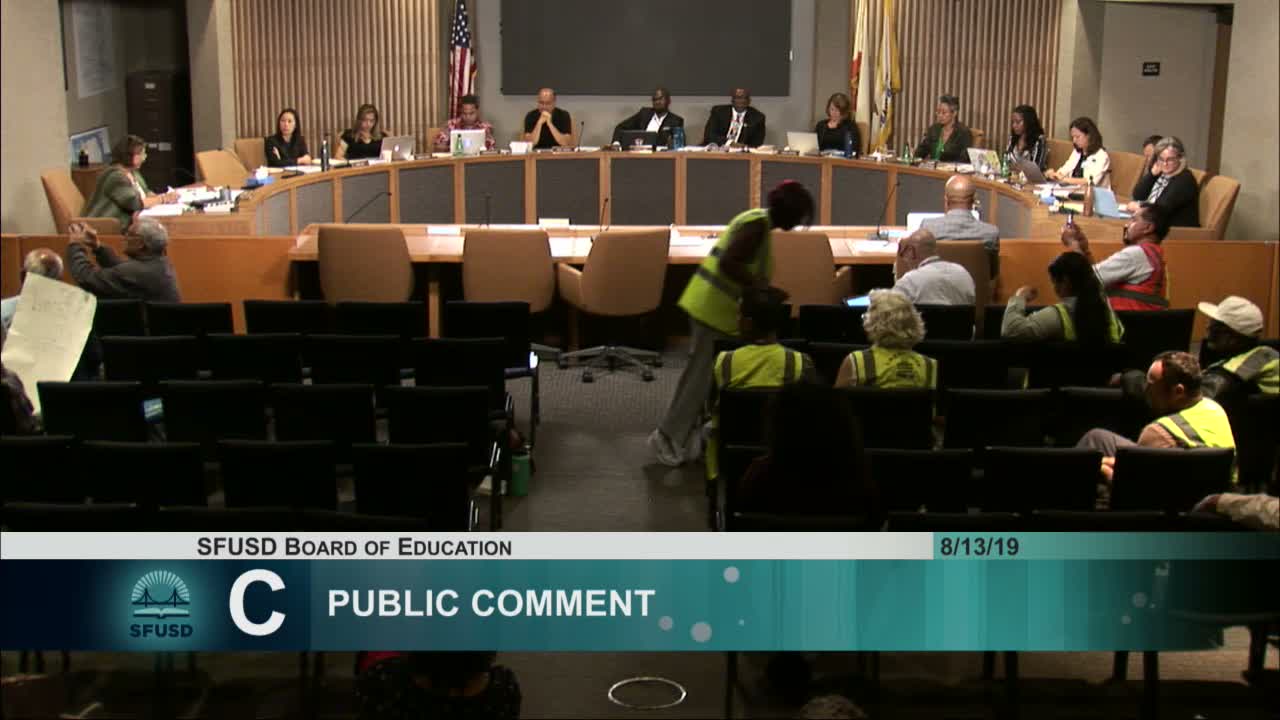
Several San Francisco school bus drivers and union representatives told the Board of Education on Aug. 13 that the district should not replace certified yellow school buses with nonconforming white vans, citing federal and state safety standards and long experience without fatalities.
Drivers and union spokespersons said white vans do not meet rollover protection, bus‑body joint strength, and passenger seating/crash‑protection standards required of school buses. Jadar Castano, chairman of Local 1741, said the yellow bus is “very, very safe” and warned against subcontracting vulnerable students to vehicles that do not meet federal and state standards.
Board staff responded that the contract under discussion (a pilot described as Zoom/shoestrings) is a narrowly targeted service for small numbers of students in diagnostic or therapeutic programs; staff said the vendor had undergone vetting that included background checks and that the pilot is partially funded by a First 5 grant. Deputy superintendent staff described operational safeguards including app tracking and parent notifications.
The consent calendar vote that included ratification of the Zoom/shoestrings contract passed on roll call after board members asked clarifying questions; staff said the pilot covers specific diagnostic transport needs (for example, transporting one student to a program site) and is not equivalent to wholesale replacement of yellow school buses.
Quotes: “The yellow bus is important,” said Jadar Castano; Sherry Klein, a driver with 15 years’ experience, noted, “In the 50 years that we have been here, not 1 fatality.” Staff described the program as vetted and partially grant‑funded.
What’s next: Board approved the pilot contract; drivers and unions said they will continue to press for preservation of the district’s traditional yellow school bus service and to monitor any broader operational changes.