Get Full Government Meeting Transcripts, Videos, & Alerts Forever!
Get email alerts on the Building Safety topic
No spam. Unsubscribe anytime.
Supervisors press DBI and utilities over Millennium Tower settlement, peer‑review records
Summary
At a Nov. 17 follow‑up hearing on 301 Mission (Millennium Tower) supervisors questioned DBI, plan reviewers and PUC about peer‑review scope, retention of peer‑review instructions, dewatering monitoring and sewer/lateral impacts. DBI acknowledged gaps in records and some limits in the department—s ability to review effects beyond property lines at the time of early peer reviews.
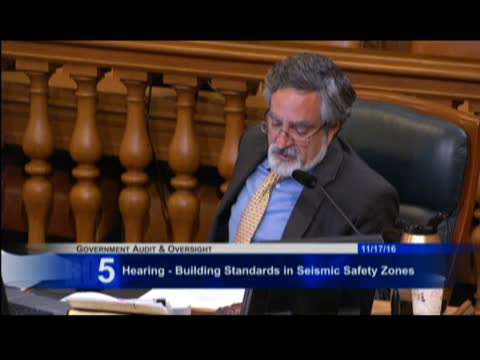
The Government Audit and Oversight Committee continued an extended inquiry into the condition of 301 Mission Street (Millennium Tower) on Nov. 17, focusing on peer review records, notices of violation and the cumulative monitoring of nearby construction and dewatering.
Chair Aaron Peskin opened the third hearing in the series and asked Department of Building Inspection (DBI) Director Tom Huey and technical staff to update the committee on peer review and enforcement actions. DBI described steps to formalize peer‑review scope, create a pool of qualified consultants, add geotechnical expertise for soil Type F conditions on very tall towers and improve records retention for design‑review letters and review correspondence.
Hansen Tom, principal engineer with DBI, said the department lacked detailed information on the Transbay Joint Powers Authority (TJPA) design and alignment during early reviews, limiting DBI—s ability at that time to evaluate impacts beyond a project—s property line. "At that time, we really had no information on the design or alignment or the building structure configuration of TJPA," Hansen Tom said, which DBI staff described as a factor that constrained a cumulative review of dewatering and adjacent excavation impacts.
Former DBI Director Frank Chu and plan checker Gary Ho reviewed the origins of peer review at DBI and the technical basis for the 301 Mission foundation permit. Ho explained that the foundation approval used an indicator‑pile program and production pile testing, and that external reviewers had reviewed foundation plans; he acknowledged questions remain about whether reviewers were asked to assess potential effects from nearby projects.
The Public Utilities Commission (PUC) told the committee it became aware in late 2014 of sewage‑flow problems at the Millennium Tower, inspected the public sewer main and replaced about 100 feet of the sewer on Fremont Street in 2015. PUC staff said they found a dip in the building—s service lateral that created a substandard grade and advised the property owner to pursue a solution inside the building; PUC has videoed laterals and reported no fractures but said it has not received ongoing monitoring reports from the building owners.
Supervisor Peskin pushed DBI on the Transbay EIR mitigation language that tasks DBI with monitoring dewatering and settlement impacts and noted months‑long gaps in dewatering meter reports tied to the Salesforce/Transbay site. DBI staff acknowledged record and process shortcomings from the period when peer review practices were new and said DBI is taking steps to strengthen written scopes for reviewers, clarify compensation and oversight and publish retention rules for review correspondence.
Public comment included an architect with decades of experience who urged clearer professional lines among designers, engineers and expeditors and provided a written statement for the record. The committee continued the item to the call of the chair for further follow‑up.