Get Full Government Meeting Transcripts, Videos, & Alerts Forever!
Get email alerts on the Treatment On Demand topic
No spam. Unsubscribe anytime.
Supervisors Hear Broad Testimony on Treatment on Demand, Citing Shortfalls in Detox Beds, Staffing and Data
Summary
A multi‑hour hearing exposed gaps in San Francisco’s Treatment on Demand framework: DPH reported about 4,600 people treated in specialty services, 58 withdrawal management beds, a median 5‑day residential wait, and a $91 million specialty SUD budget; providers and first responders called for 24/7 intake, stabilization centers and workforce pay parity.
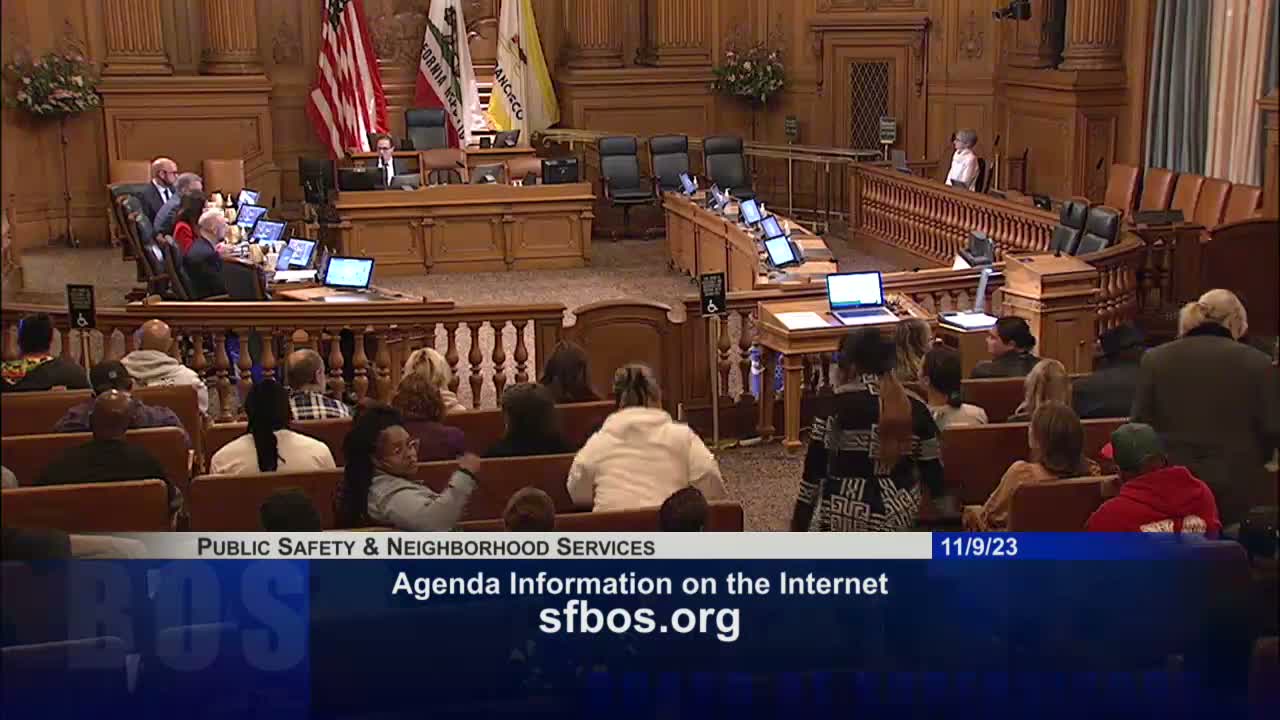
The Public Safety and Neighborhood Services Committee devoted much of its Nov. 9 meeting to a multi‑panel hearing on the state of Treatment on Demand in San Francisco, drawing public health officials, first responders, criminal‑justice partners, providers and dozens of public commenters.
Supervisor Rafael Mandelmann opened the hearing by urging scrutiny of the gaps between policy goals and service delivery and warned of a worsening overdose crisis: “We are heading towards being the most deadly year for overdoses ever. Easily I think could get to 800 this year,” he said.
Hillary Conins, director of Behavioral Health Services at the Department of Public Health, presented updated utilization and capacity figures for fiscal year 2022–23: roughly 4,600 unique people were treated in the county’s specialty SUD system; about two‑thirds were people experiencing homelessness; approximately 2,100 more were treated in other settings; and the specialty SUD budget is approximately $91,000,000 with about 34% from city general fund, 14% Prop C and 52% state/federal funding. Conins said DPH’s median wait time for residential treatment rose to five days in the most recent fiscal year and reported a current residential withdrawal management capacity of 58 beds, with additional out‑of‑county medically supported withdrawal management contracts in process.
David Pading, interim medical director for substance use services, highlighted workforce shortages and state regulatory constraints for opioid treatment: he urged state guideline changes to adapt methadone and methadone dosing practice for fentanyl‑era needs and cited national shortages of behavioral clinicians as a limiting factor in expanding hours and 24/7 access.
Simon Pang of San Francisco Fire Department’s community paramedicine team described first‑responder experience: during a street survey crews found roughly 2% of engagements expressed immediate interest in treatment; about 90% of overdose calls result in transport to emergency rooms, but SFFD staff said securing buprenorphine prescriptions from ERs is difficult and many patients reappear within 72 hours, illustrating transfer and follow‑through gaps.
Representatives from the District Attorney (Susan Christian), the Public Defender (Fatima Avayan), and the Pretrial Diversion Project outlined barriers for justice‑involved people: a surge in Mental Health Diversion petitions, limited forensic clinical staffing in prosecutorial offices, language and insurance barriers, and long waits for dual‑diagnosis residential placements (DA estimated 3–4 weeks for dual‑diagnosis, longer for out‑of‑county care).
Providers and coalitions including HealthRight 360, the Treatment on Demand Coalition and the Recovery Coalition urged urgent investments in workforce pay parity, culturally and linguistically appropriate residential and step‑down beds, streamlined intake and fewer transfer points, and creation of stabilization centers with 24/7 intake to capture moments when people want help. Provider presenters repeatedly tied service shortfalls to contracting practices that underfund staffing and stressed the need for better measures of population demand.
Public comment reflected a wide range of perspectives: some urged expansion of harm reduction and low‑barrier services, others called for abstinence‑based and faith‑based options, while many speakers with lived experience emphasized stabilization centers, peer workforce development and the need for housing and step‑down supports. The committee ultimately voted to file the hearing record.
Next steps: DPH expects to provide a follow‑up Treatment on Demand report in February; committee members asked staff to pursue workforce strategies, improved data infrastructure (EPIC transition), and planning for stabilization/crisis‑stabilization capacity and step‑down housing.