Get Full Government Meeting Transcripts, Videos, & Alerts Forever!
Get email alerts on the Religious Freedom topic
No spam. Unsubscribe anytime.
Utah House approves trio of bills aimed at balancing LGBT nondiscrimination with religious‑liberty protections
Summary
After hours of debate over definitions, scope and public‑employee duties, the Utah House passed SB 296 (anti‑discrimination and religious freedom amendments), SB 297 (protections for religious expression), and third substitute HB 322 (religious liberty act). Each bill moves back to the Senate for further consideration.
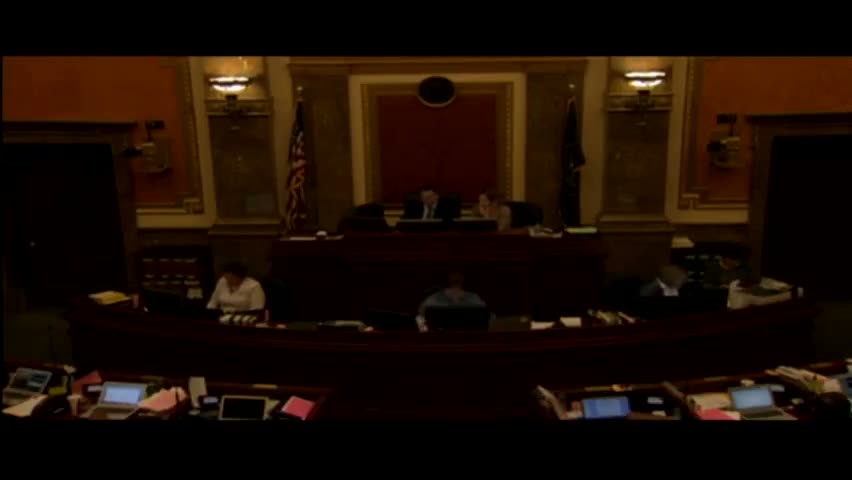
SALT LAKE CITY — The Utah House of Representatives voted late on March 11 to advance a package of measures intended to expand nondiscrimination protections for sexual orientation and gender identity while also adding statutory protections for religious expression.
The House approved Senate Bill 296, ‘‘Anti‑discrimination and Religious Freedom Amendments,’’ by a vote of 65–10; second substitute SB 297, ‘‘Protections for Religious Expression and Beliefs About Marriage,’’ by 66–9; and third substitute HB 322, the ‘‘Religious Liberty Act,’’ by 54–21. Each bill will be returned to the Utah Senate for further consideration.
Proponents said the measures represent a negotiated ‘‘Utah solution’’ that threads a balance between fair access to employment and housing and protections for individuals and faith groups to exercise religious beliefs. Representative Christiansen, the House sponsor for components of the package, urged colleagues to ‘‘strike the appropriate balance’’ and said the bills were shaped by input from a wide set of stakeholders, including businesses and faith groups. He summarized SB 296 as protecting employment and housing access while preserving conscience protections and enforcement through existing administrative processes.
Opponents raised technical and constitutional concerns. Representative Jeremy Peterson, identifying himself as a property manager, said he had ‘‘never been aware of a case’’ of landlord discrimination in his experience and that he was troubled by the "nebulous language" in the housing provisions and by the speed of the bill’s movement: "As the bill is currently written, I won't be able to support it." Other members, including Representative Brian King, warned that some language could be read to allow public employees to let personal religious objections affect the performance of official duties. King said public officials' "obligation to discharge their duties in their public capacity has to trump any personal religious objections they may have."
Sponsor remarks drew on a long drafting history and repeated that enforcement would continue to run through the Utah Labor Commission for employment and that the bills were intended not to ‘‘wash away the character of the religious community’’ but to preserve rights on both sides. In one widely quoted line, the sponsor said after meeting with members of the LGBT community, "I don't approve of their lifestyle. But I love them." That sentiment was presented as a plea to separate personal belief from legal protections.
Lawmakers also debated whether the bills properly coordinated with federal civil‑rights requirements and existing state law. Critics cautioned that conflicting language could risk putting state agreements to enforce federal nondiscrimination law in jeopardy or invite federal litigation; sponsors responded that statutory text had been reviewed by legal counsel and by national scholars and that courts may ultimately be needed to define some of the boundaries.
Votes followed motions to end debate. Representative Anderegg successfully called the previous question on SB 296; the sponsor offered a final summation asking members to "vote your conscience." After the roll calls, the three bills passed in the House and were transmitted back to the Senate for possible concurrence or further amendment.
What’s next: Each bill will return to the Utah Senate under its substituted form. If the Senate concurs, the measures would proceed to enrollment and then to the governor; if the Senate rejects changes the bills could return to the House for further action. Courts or federal agencies may ultimately interpret the contested provisions if disputes arise after enactment.
Votes at a glance: SB 296 — House 65 yes, 10 no; SB 297 — House 66 yes, 9 no; HB 322 (third substitute) — House 54 yes, 21 no.