Get email alerts on the Professional Regulation topic
No spam. Unsubscribe anytime.
Senate advances licensing changes for structural engineering after amendment
Summary
Senate Bill 200, which narrows the definition of structural engineering and restricts professional engineers from practicing in certain high-risk structures, was amended on the floor (threshold change) and advanced after debate about safety and equity; vote recorded 23 yes, 2 no, 4 absent.
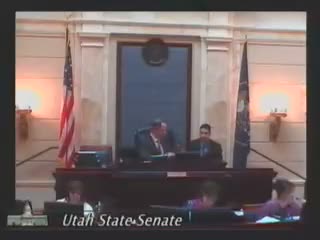
Senate Bill 200, titled Professional Engineers Licensing Amendments, received floor debate, an agreed amendment and a roll-call vote to advance. Sen. Fife summarized the bill as clarifying distinctions between the practice of professional engineering and structural engineering and said the bill would limit structural engineering practice to "significant structures" that pose a substantial hazard to human life, including hospitals and fire stations.
Senator Niederhauser raised concerns about potential inequities and proposed changing a numerical threshold in the bill (line 138) from 60,000 to 200,000; that amendment was discussed and characterized on the floor as a friendly amendment and accepted. Proponents cited public safety and recent seismic events as rationale; Sen. Fife referenced an earthquake in Wells, Nevada as an example of why clearer definitions matter.
A roll-call vote recorded 23 yes votes, 2 no votes and 4 absent; the bill was read for a third time as amended.
Why it matters: The change redefines regulatory boundaries between professional and structural engineering practice and creates a temporary licensure exemption window for applicants. Supporters said the measure preserves public safety on high-risk structures; opponents worried about unfair restrictions on engineering practice in other contexts.
Next steps: The amended bill moves forward for finalization and any implementing rulemaking that may be required under the licensing statutes.
AI generated
The text on this page is AI generated. Summaries, highlights, analysis, and video transcripts are all produced from the original source material.
AI can make mistakes, so if you spot one, and we will fix it for everyone.
Note: the source content is unaltered by us. Any content source we link to, be it a video, an audio recording, or a document, is presented exactly as its publisher released it. That publisher is usually a government body, sometimes an individual official or another organisation.