Get Full Government Meeting Transcripts, Videos, & Alerts Forever!
Get email alerts on the Disability Rights topic
No spam. Unsubscribe anytime.
Disability Rights Arkansas outlines investigations, representative‑payee audits and faces questions about human development centers
Summary
Disability Rights Arkansas described its nine federal programs, investigatory access authority and representative‑payee audits. Lawmakers asked for more public reporting and raised concerns that national activists seek to close human development centers; Disability Rights Arkansas denied suing the state or pursuing closures.
Disability Rights Arkansas (DRA) presented an overview of its work — monitoring, investigations and legal advocacy for people with disabilities — and fielded extended questions about oversight of human development centers (HDCs), guardianship and access to services.
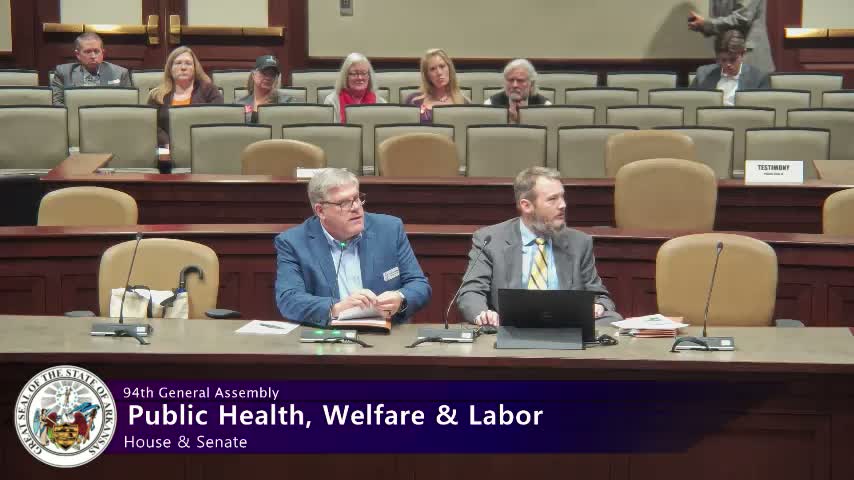
Tom Massaw, executive director, and Thomas Nichols, director of legal and advocacy services, told the committee the nonprofit operates nine federal programs and maintains a staff of roughly 24 on a $2 million budget. Massaw described mandated duties under Protection and Advocacy grant programs, including monitoring facilities, investigating abuse and neglect, educational advocacy and representative payee auditing for Social Security beneficiaries.
"We investigate allegations of abuse, neglect, exploitation in public and private settings," Nichols said, describing monitoring and investigatory authority and the group’s ability to publish public or private reports when warranted. He said the office receives large volumes of special‑education requests and that about 1,800 intake calls came in over a recent fiscal year; more than 150 special‑education requests were opened since August.
Much of the committee’s time focused on human development centers and related community transitions. Several representatives expressed concern that national advocacy organizations or DRA’s membership associations advocate closing HDCs. Representative Ladyman said video and testimony in Congress indicated national groups had promoted closing sheltered workshops and HDCs; he asked whether DRA supports closing HDCs. "We don't work for the state...we're a private nonprofit," Massaw said, adding that the organization sets state priorities and that the national membership does not dictate state actions.
DRA denied suing the state to close the Booneville HDC when questioned. "We didn't sue the state... I can verify," Nichols said. Committee members pressed DRA on its frequency of monitoring, when it uses unaccompanied access authority and how often it requests records from DHS; Nichols said requests to the DHS privacy office are frequent and that monitoring is driven by complaints and risk assessments.
Members also raised consumer‑safety and guardianship concerns. DRA explained it helps terminate or limit unnecessary guardianships by presenting evidence to courts and assists victims of exploitation; it also manages a Social Security representative‑payee auditing program that Social Security funded beginning in 2018 to audit payees' accounting.
What’s next: Members asked DRA to continue engagement with the committee, to clarify monitoring practices and to provide data that the state (or the nonprofit) can publish to improve public transparency.