Get Full Government Meeting Transcripts, Videos, & Alerts Forever!
Get email alerts on the Healthcare Medianetworks topic
No spam. Unsubscribe anytime.
Senate committee presses DHS and insurers over Medicaid 'pass' ownership and provider payments
Summary
Lawmakers pressed the Department of Human Services and insurers about proposed provider-agreement language after reporting that an insurer-owned group held a substantial ownership interest in a Medicaid 'pass.' Pass representatives defended provider-majority governance and cited improving claims metrics; members asked DHS and the Insurance Department to draft broader language to block cross-ownership and holding‑company workarounds.
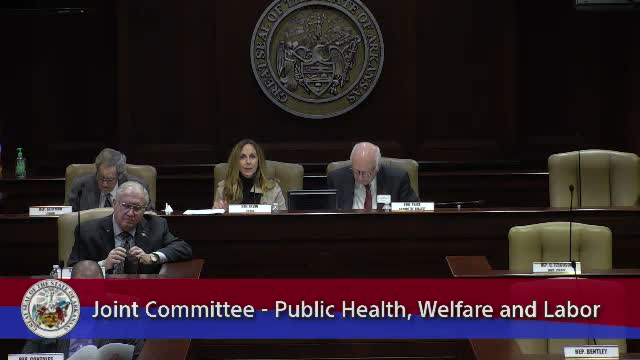
Little Rock — Lawmakers on the Senate Public Health, Welfare and Labor Committee on Wednesday pressed the Department of Human Services and insurance regulators to tighten contract language for Arkansas’ provider‑led Medicaid ‘passes’ after reporting that an insurance company had held an ownership stake that appeared to conflict with the statute’s provider‑majority intent.
DHS Deputy Director Paula Stone told the committee the department added clarifying language to the annual provider agreement that would prohibit a participating provider from being owned in whole or in part “by an entity licensed by the Arkansas Insurance Department or by any state’s insurance regulatory agency as an insurance carrier or a health maintenance organization participating in that same pass.” Stone said one pass provided written agreement to that language, one offered verbal agreement and a third said it would take the matter to its board.
Senators, led by Sen. Shawn Hammer, asked whether any insurer‑owned providers gained financially from such ownership and whether the draft language would prevent a single ownership group from effectively controlling two passes. “I want reassurance that before any bridal decision is made on this, we’re going to have a chance as a committee and legislative branch to review that,” Hammer said, emphasizing a desire for a firewall against a single entity consolidating control.
Representatives of the three passes at the table — Empower Healthcare Solutions, Summit Community Care and Arkansas Total Care — described governance structures they said preserved provider control. Rob Slattery, CEO of Empower, said his pass is “primarily provider owned” with provider members directly involved in operations. Jason Miller, plan president for Summit, described a 51% provider coalition backed by 71 Arkansas provider investors. John Ryan, plan president for Arkansas Total Care, said his group restructured an external provider entity (LifeShare) to bring in local provider expertise and maintained it complied with licensing and readiness reviews.
“From an Empower perspective, they are Arkansas‑based providers and they have significant influence as it pertains to not only the governance of our organization but our operations,” Slattery told the committee.
Committee members repeatedly raised whether corporate holding structures could let an insurer exert influence across more than one pass. Department and insurance‑department staff said holding companies and acquisitions (they discussed Anthem’s planned purchase of Beacon Health Options) complicate the matter and that contract language should be broadened to address ownership through holding companies and to prohibit a pass from owning another pass. AID staff said the department’s statutory role has been primarily financial solvency; enforcement of claims‑handling rules has generally been left to Medicaid contracting but the legislature has carved out specific consumer protections that AID enforces.
On provider payments, pass leaders reported improving claims performance and pledged continued outreach to providers with problems. Empower said it had processed about 1.13 million claims and paid roughly 977,000 of them (about 86.7% paid; 11.7% denied primarily as duplicates); Summit and Arkansas Total Care reported high percentages of clean claims paid within contractual timeframes (Summit said it pays 98% of clean claims within 60 days; Arkansas Total Care said about 82% are paid within seven days and 95% within 14 days). Pass officials acknowledged start‑up challenges — duplicate or coding issues — and said they have expanded provider‑relations staff and field teams to resolve local problems.
DHS officials emphasized oversight mechanisms: monthly operational reports, an ombudsman office that fields beneficiary complaints, and external quality reviews required by federal rules. Paula Stone said DHS will continue to monitor performance metrics and step in contractually if a pass fails required measures.
Next steps requested by the committee include: DHS circulating the proposed provider‑agreement language to members, the insurance department drafting language that addresses holding‑company ownership and prohibitions on a pass owning another pass, and DHS providing data on denial rates, pend volumes and the share of non‑clean claims by amount and percentage.
The committee did not take formal action on the provider agreements at the hearing; members signaled they may call a short follow‑up meeting if necessary once DHS and regulators have refined the language.