Get Full Government Meeting Transcripts, Videos, & Alerts Forever!
Get email alerts on the Education Finance topic
No spam. Unsubscribe anytime.
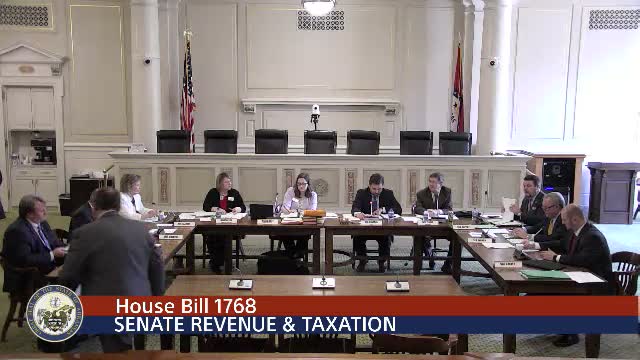
Senate committee approves statewide $3M tax-credit scholarship after partisan questions and public testimony
Summary
Senate Bill 5-39, introduced by Senator Johnson, creates a $3 million annual cap on a tax-credit scholarship for eligible K–12 students; the Revenue & Tax Committee advanced the bill after DFA shifted to support and a mix of public testimony for and against.
Senate Bill 5-39, presented by Senator Johnson, would create a statewide tax-credit scholarship program with an annual cap of $3 million. The credit would be available to taxpayers who owe Arkansas income tax and are willing to direct that tax liability to student-support organizations; eligible students were described as those from households at 1.5 times the free-or-reduced-lunch threshold, military families, foster children, and students with individualized education programs (IEPs). Sponsors said funds could be used for tuition, textbooks, tutoring and other education services, and up to 10% of the program cap could cover administrative costs.
Committee members asked about administration, the first-come-first-served mechanism if demand exceeds the cap, and whether the program would include hold-harmless protections for public schools. Senator Johnson said Treasury would administer the program and promulgate rules; first-come-first-served administration would apply within the capped amount. Paul Gehring of DFA said the governor’s office instructed DFA to support the bill and that the fiscal treatment would be addressed by the executive branch if necessary.
Public testimony included parents and advocates who described individual needs and how scholarships could help students with disabilities; representatives of public-education associations (AAEA/AEA) spoke in opposition, citing concerns about accountability and oversight of private providers receiving public funds. After questions and testimony, the committee voted by voice to pass SB 5-39.