Get Full Government Meeting Transcripts, Videos, & Alerts Forever!
Get email alerts on the Tax Policy topic
No spam. Unsubscribe anytime.
Senate committee fails to advance bill raising used-vehicle exemption to $7,500 after fiscal concerns
Summary
A proposal to raise Arkansas’s sales-tax exemption for used vehicles from $4,000 to $7,500 (House Bill 13-42) failed after committee debate about a $12.6 million net revenue impact and disagreement over delayed implementation dates.
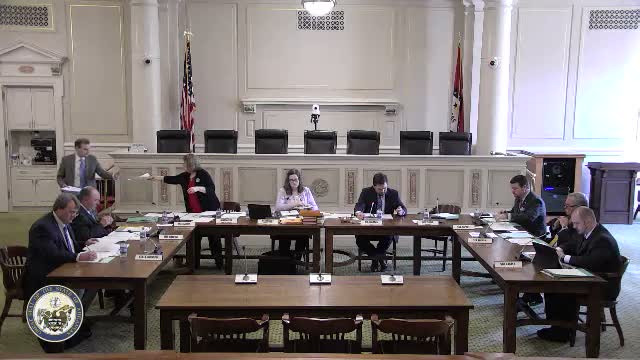
The Senate Revenue & Tax Committee considered House Bill 13-42, which would raise the threshold at which used-vehicle sales become exempt from sales tax from $4,000 to $7,500. Representative Peyton, one of the bill’s presenters, framed the measure as targeted tax relief for lower-income families who rely on low-cost transportation and said the change would help struggling households afford dependable vehicles.
The bill had two competing amendments that changed the effective date. One would make the change effective July 1, 2020; the other would delay implementation until July 1, 2022. Supporters said a later effective date would allow time to account for the revenue reduction in future budgets; opponents said delaying binds a future legislature and risks larger long-term revenue loss.
The Department of Finance and Administration (DFA) provided the committee with a fiscal estimate showing a net revenue loss of $12,600,000. Paul Gehring of DFA explained the estimate includes about $14.2 million in lost revenue from exempting additional used-vehicle sales and roughly $1.6 million in additional revenue from removing a $4,000 exemption that currently applies to some new trailers.
Senators questioned whether the state could absorb the loss given recent tax reductions and the uncertain economy. Supporters argued the change would be visible to taxpayers and could be phased in, while critics warned it would reduce funds available for state and local services.
The committee voted on the bill as amended; after debate the motion to pass failed on a voice vote. The chair recorded the failure and the bill will not advance from this committee at this time.