Get Full Government Meeting Transcripts, Videos, & Alerts Forever!
Get email alerts on the Courthouse Security topic
No spam. Unsubscribe anytime.
Uvalde County adopts courthouse emergency operations plan after year-and-a-half committee review
Summary
The Commissioners Court adopted a courthouse Emergency Operations Plan developed by a courthouse security committee that spent about 18 months preparing the plan; the presiding district judge asked the court to adopt it as required by state law and the motion passed by voice vote.
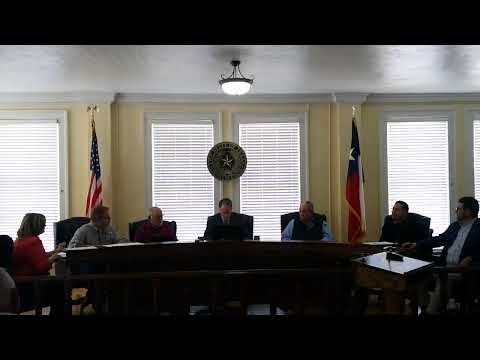
The Uvalde County Commissioners Court on Dec. 9 adopted a courthouse Emergency Operations Plan developed through roughly a year-and-a-half of committee meetings and trainings, the presiding district judge told the court.
The judge said he had "emailed [the plan] to each of the commissioners" and asked the court to adopt it as required under the local government code. He thanked committee members who participated, including Judge Mitchell, Judge Diaz, County Attorney John Dodson, District Attorney Christina Mitchell, Commissioner Garza, Sheriff Nolasco, Chief Deputy Brandon McCutchen and Fred Ratliff.
The plan is the product of work by the courthouse security committee and is intended to guide emergency response, staff training and coordination with law-enforcement agencies. The presentation emphasized committee meetings and trainings that produced the written Emergency Operations Plan; the judge said the committee conducted roughly 18 months of meetings and training to develop it.
A motion to adopt the plan was made, seconded and approved by voice vote. The record shows a voiced "motion carries" but does not provide a roll-call tally or recorded votes by name.
The court did not substantially amend the plan on the record. The judge offered to answer any questions and staff said copies had been emailed to commissioners prior to the meeting. The court moved on to the next agenda items following adoption.
What—s next: Adoption places the plan on the county—s records; the judge and staff did not announce an implementation timeline or required follow-up reports in this meeting.