Get Full Government Meeting Transcripts, Videos, & Alerts Forever!
Get email alerts on the Parks Funding topic
No spam. Unsubscribe anytime.
Bastrop staff outlines new public space fund and proposes $250 park enrichment fee per unit
Summary
Staff proposed a new Public Space and Community Enrichment Fund (Chapter 17) to simplify B‑3 civic‑space rules, require park dedication metrics (1 acre per 100 single‑family units; 1 acre per 200 multifamily units) and levy a $250 per‑unit park enrichment fee for park maintenance and improvements; commissioners discussed quadrants for reinvestment and oversight by the parks board with final council approval.
City staff presented a draft ordinance to establish a Public Space and Community Enrichment Fund intended to simplify and clarify civic‑space and parkland dedication requirements in Bastrop’s development code.
Key elements: Staff proposed park dedication metrics (1 acre for every 100 proposed single‑family dwelling units; 1 acre for every 200 multifamily units), a fee‑in‑lieu pathway for small subdivisions, and a separate "park enrichment fee" proposed at $250 per dwelling unit to fund maintenance, upgrades and programming citywide. Staff also suggested dividing the city into quadrants for reinvesting fee‑in‑lieu dollars close to the originating development and explained that funds not expended within seven years would be subject to refund to the payer.
Oversight and use: Staff recommended the parks board provide funding recommendations with final approval by city council. The park enrichment fee is intended to address maintenance and enhancement of existing parks (for example, Fisherman’s Park splash pad redesign) rather than to fund unrelated projects.
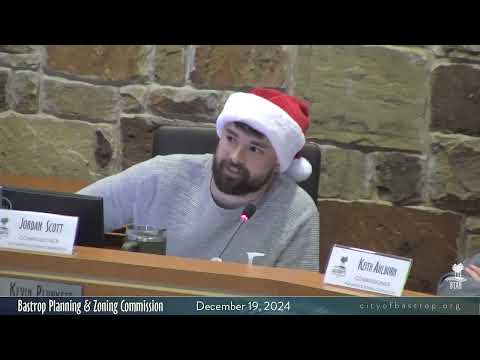
Discussion: Commissioners asked whether the fee applies to commercial development (it does not) and whether impact fees and agreements with partners (e.g., Corex) would affect how costs are recouped; staff said impact fees still apply for water/sewer connections. Commissioners also discussed equity and cost impacts for small developers and custom homes; staff said the fee for a single lot would be minimal (staff cited examples such as $400 fee in certain contexts) and suggested hybrid approaches (partial dedication plus fee) could be considered.
Next steps: Staff will take feedback, obtain legal review, coordinate with the parks board and return with refined ordinance language and recommended administrative processes.