Get Full Government Meeting Transcripts, Videos, & Alerts Forever!
Get email alerts on the Prohibited Camping Ordinance topic
No spam. Unsubscribe anytime.
Roseburg commission reviews camping ordinance changes after Grants Pass ruling; concerns about enforcement and need for campsite
Summary
Commissioners discussed proposed amendments to the city—s prohibited camping code following Grants Pass and Boise rulings, including added diversion language, new citation penalties (fines and a possible short jail term), and whether existing shelters and mission services suffice instead of a dedicated campsite.
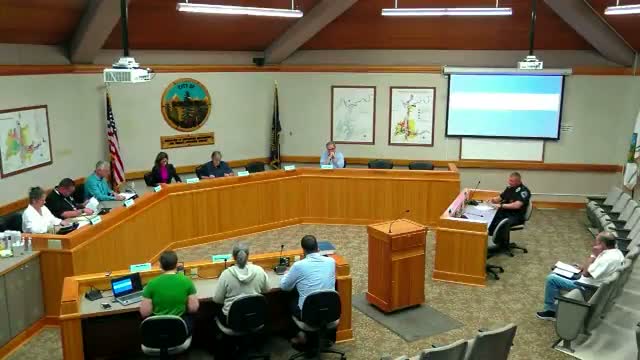
The Roseburg City Homeless Commission met in August to review proposed changes to the city—s prohibited camping ordinance in light of recent court rulings, and commissioners debated whether the city still needs a dedicated campsite or should rely on existing shelters and service sites.
City Attorney Jim Forrester told the commission the ordinance explicitly incorporates language to mirror the municipal court—s diversion practice: "If they go and seek something, then they can come back to the court, and the judge will dismiss it," he said, describing how judicial discretion and diversion are written into the proposed code changes. The chair added that the ordinance under consideration at tonight—s council meeting would raise the civil penalties for citations (the draft lists a first conviction not to exceed $100 and a second up to $250) and could lead to short jail exposure in repeat cases.
Police Captain Sanders warned enforcement capacity is limited. "Not simply just because we—re short staffed, but even if we are fully staffed, we wouldn't be able to to maintain no campsites," he said, stressing the difference between issuing citations and being able to sustain continual campsite removal and oversight. Sanders and other staff noted that prior practices of camp cleanup produced temporary displacement but did not end camping without consistent follow-up services.
Commissioners and service providers questioned whether shelters, missions and navigation-center services qualify as adequate "places to go" under the Grants Pass and Boise decisions. Several speakers noted the practical effect: mission and navigation services may now count as available alternatives, which can affect whether camping can be enforced in a given spot. Legal staff reminded the group that state law (House Bill 3115) and evolving court interpretations mean the time/place/manner standard in Oregon remains partly unsettled and that litigation will continue to shape enforcement limits.
Several commissioners said the city should compile an inventory of available shelter beds and diversion resources before deciding whether to commit to a new campsite. The chair proposed asking each agency to report bed counts to staff for a one-page "cheat sheet" the commission can review at its next meeting. The commission did not take a formal vote on the ordinance itself; city council action was noted as occurring separately that night.
The commission agreed to keep monitoring litigation, enforcement capacity and service availability as the city finalizes ordinance language.