Get Full Government Meeting Transcripts, Videos, & Alerts Forever!
Get email alerts on the Criminal Appeal topic
No spam. Unsubscribe anytime.
Court orders Rule 23(b) remand in State v. Jones after debate over officer location and adaptive‑headlight evidence
Summary
A Utah Court of Appeals panel said it will remand State v. Jones for a Rule 23(b) hearing after the State conceded one factual issue and counsel disputed whether proffered affidavits about adaptive headlights and driver's‑license hearing findings meet the standard for remand.
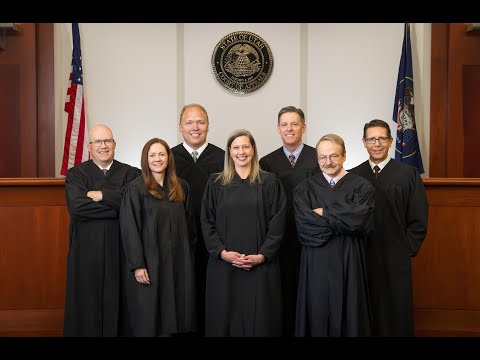
A three‑judge panel of the Utah Court of Appeals said Wednesday it will remand State v. Jones for a Rule 23(b) hearing after hearing argument over whether proffered affidavits and other evidence meet the proffer standard for ineffective‑assistance claims.
"The state agrees that this case should be remanded on at least 1 of the factual issues before the court in the 23(b) motion," counsel for the State said at the start of argument. The panel noted the State’s concession that Deputy Latham’s precise location during the stop may warrant a remand but spent much of oral argument weighing two other contested proffers: testimony about adaptive headlights and the evidentiary value of a Driver’s License Division (DLD) hearing report.
Why it matters: The scope of any remand could affect multiple aggravated‑assault counts tied to the testimony of Deputy Frampton. The parties argued about whether proffered affidavits provide the non‑speculative, fact‑based showing Rule 23(b) requires — and whether the affidavits must identify a specific witness by name or may rely on a factual description of anticipated testimony.
State counsel told the panel the Griffin line of cases requires careful review of whether a defendant has identified witnesses and facts sufficient to show both deficient performance and prejudice under Strickland. Defense counsel countered that Griffin focuses the court on the contents of affidavits rather than the precise identity of the affiant and that the affidavits here say the car had factory 'adaptive headlights' that can swing in the direction of steering input, a fact used heavily at trial to explain why officers felt illuminated and threatened.
The panel explored practical complications: the vehicle in question was later totaled, making an investigator’s ability to test its headlights impossible, and counsel debated whether a dealership expert, mechanic or accident‑reconstructionist could supply the necessary technical testimony. Judges also questioned whether DLD findings could be used to impeach trial testimony if a hearing officer could not recall the underlying testimony, or whether the DLD report could operate instead as a prior inconsistent statement.
Counsel for Jones urged the court to remand on all three proffered grounds, citing an allegation of cumulative prejudice if multiple errors are shown; the State said remanding beyond its concession risks weakening the Rule 23(b) standard and creating uncertain precedent. The panel repeatedly returned to two practical questions: (1) whether the proffer contains non‑speculative facts that could support Strickland’s two prongs, and (2) whether the proffer identifies a witness (or at least describes the testimony an identifiable witness could give) sufficient to justify remand rather than a fishing expedition.
The court indicated it will order a 23(b) remand and will later specify the scope. "We'll take that matter under advisement and there will be a 23(b) remand and we'll let you know the scope of that," the panel said at the hearing’s close.
Next steps: The Court of Appeals will issue an order that outlines the precise scope of the remand and which factual issues will be revisited at the 23(b) hearing.