Get Full Government Meeting Transcripts, Videos, & Alerts Forever!
Get email alerts on the Juvenile Justice topic
No spam. Unsubscribe anytime.
Utah Supreme Court Hears Challenge to Transfer of 15-Year-Old to Adult System
Summary
At oral argument in Inray EM, defense counsel asked the Utah Supreme Court to vacate a juvenile transfer order, saying the juvenile court misapplied statutory factors and impermissibly relied on non‑qualifying offenses; the State urged a holistic, comparative reading of the statute.
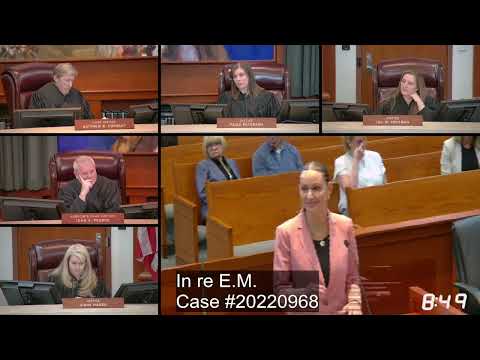
At oral argument before the Utah Supreme Court, counsel for a 15‑year‑old whom a juvenile court transferred to the adult system asked justices to vacate the transfer order and remand for a legally correct analysis. "This child should never face the prospect of the inside of an adult prison cell," Monica Mayo, counsel on behalf of Youth Talent EM, told the court, arguing the juvenile court conflated distinct statutory factors and treated non‑qualifying conduct as part of the seriousness inquiry.
Why it matters: The case asks the high court to decide whether the juvenile‑transfer statute requires narrow, factor‑by‑factor findings limited to a qualifying offense or whether a juvenile court may take a broader, holistic view that weighs surrounding circumstances and comparative benefits of juvenile versus adult services. The decision could affect how frequently young teens are moved into the adult criminal system in Utah.
Mayo told justices the juvenile court made three principal legal errors: conflating other statutory factors into the rehabilitation inquiry, considering the possibility of parole and adult‑system services, and using multiple alleged offenses rather than the statutorily defined qualifying offense to inflate the seriousness factor. She pressed that the statute's text calls for discrete findings on each of five factors before engaging in the "contrariness" analysis that can lead to transfer.
"The statute is designed to be very, very narrow," Mayo said, arguing the legislature intended transfers to be rare and that the juvenile court here improperly relied on 16 other alleged offenses when the statutory plain language confines the seriousness inquiry to the qualifying offense.
The State, through John Nelson, countered that the court must ask which of the two systems — juvenile or adult — will better rehabilitate the youth and protect public safety, and that this inquiry is necessarily comparative and holistic. "The essential question is which of the two systems will best serve to both rehabilitate him in his transition to adulthood and also promote the long term safety of the community," Nelson said, defending the trial court's 22‑page ruling and saying overlap among factors is often driven by the facts.
Justices pressed both sides on practical and textual questions: whether the statutory list is exclusive or permissive; how to tell if misplacing a fact into the wrong factor materially affected the ultimate discretionary decision; and what evidence the State needed to carry its burden to show juvenile services would be inadequate. On the record, Mayo emphasized the juvenile's progress in custody — improved learning, leadership status, and a trajectory toward graduation — and argued the State produced no affirmative evidence that adult custody would provide superior rehabilitative services.
Both sides framed the dispute over statutory interpretation and evidence rather than factual innocence or guilt. The court's questioning ranged from hypotheticals about surrounding conduct and motive to technical questions about the statutory terms "criminal record" versus "criminal history." The argument concluded with justices reserving their questions for later deliberation; the court did not announce a decision timeline.
The Utah Supreme Court heard further argument from both parties; the court's eventual opinion will determine the permissible scope of factors and whether the juvenile court's analysis was legally sufficient.