Get Full Government Meeting Transcripts, Videos, & Alerts Forever!
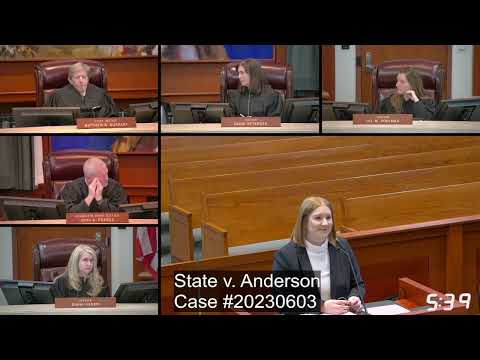
Utah Supreme Court hears dispute over whether 'district' in venue law means judicial district or prosecution district
Summary
In State v. Anderson the state told the court 'district' should be read as a judicial district, pointing to territorial practice and the vicinage clause; the defense urged the court to read the statutory phrase in light of historical practice and legislative amendments as referring to county/prosecution districts. The court took the case under advisement.
During oral argument in State v. Anderson, counsel for the State and the defendant disputed whether the word “district” in Utah’s criminal venue statute refers to a judicial district or to a prosecution district.
Natalie Edmondson, arguing for the State, told the court the dispositive question is statutory meaning: "The court is tasked today with determining the meaning of the word district within the criminal venue statute" and argued "the only applicable and relevant district in that context is a judicial district" because prosecution districts did not exist when the venue statute was enacted in 1973. She relied on the vicinage-clause language and territorial usage to support her reading and said the statute’s language appears to have been transplanted from the vicinage clause.
Laurie Seppi, representing Mr. Anderson, asked the court to affirm the district court’s ruling that the word "district" means prosecution district (and, in practice, the county where…
Already have an account? Log in
Subscribe to keep reading
Unlock the rest of this article — and every article on Citizen Portal.
- Unlimited articles
- AI-powered breakdowns of topics, speakers, decisions, and budgets
- Instant alerts when your location has a new meeting
- Follow topics and more locations
- 1,000 AI Insights / month, plus AI Chat