Get email alerts on the Capital Improvements topic
No spam. Unsubscribe anytime.
Dewey Engineering outlines capital plan, defends change-order record and explains fee structure
Summary
At the Scranton School District vendor-relations meeting, Dewey Engineering presented its capital improvement plan, defended a low litigation/change-order record and explained retainer and change-order fees; board members pressed for spreadsheets and clearer fee breakdowns.
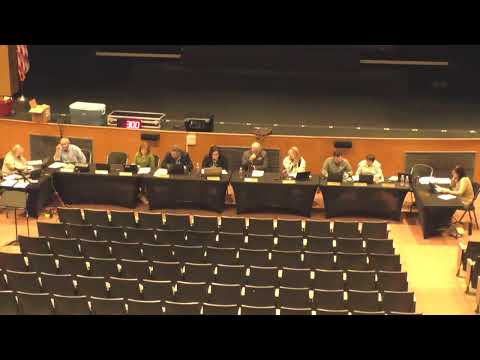
Dewey Engineering, now operating as part of CHA, told Scranton School District directors on Sept. 30 that the firm’s oversight and design work has helped deliver most high-priority facility projects on time and on budget while limiting disputes.
Presenter Arif, representing Dewey, summarized the district’s capital plan and the firm’s retainer work, noting the company has served the district since Feb. 1, 2021. He described a logic-matrix used to prioritize projects by safety, instructional impact and number of people affected and said the district holds a detailed profile for every building. Arif said the team has overseen “emergency projects that have been resolved quickly, promptly with technical competency” and highlighted investments he said totaled roughly $76,000,000 to date, including asbestos abatement and ESSER- and RCAP-funded work.
Why it matters: directors said they wanted clearer accounting of how consultant fees are applied, how change orders are vetted, and whether some small repairs would be cheaper if competitively bid rather than handled as change orders.
Arif explained Dewey’s two basic fee models: owners’-rep services (OPR) charged as a percentage of project cost—about 2% for part-time oversight and 4% for full-time oversight—and design fees that vary by project (he cited examples of higher percentages for certain design contracts). He described the change-order workflow: field surveys, written supplemental scope, contractor pricing, estimator review and schedule and permit impact analysis before any submission to the board. Arif also reported the firm’s spreadsheet shows roughly $2.3 million in approved change orders on about $81 million of projects and a blended fee total of roughly $123,000 on those change orders; he offered to share the full spreadsheet with administration for board review.
Board response and follow-up: directors pressed for more precise, line-item information. One director asked whether hidden asbestos discoveries raise a project’s priority; Arif said asbestos management and testing are handled by the district’s environmental consultant (Pennoni/Ciccardi) and that asbestos identified for disturbance is prioritized. Several directors asked for a simple, reproducible breakdown of the labor and incidental costs—advertising, surveying, specification development—that together produce the percentage fees. Arif offered to provide example project breakdowns showing staff hours and cost categories for representative bids.
The meeting closed the Dewey discussion with a request that the administration circulate detailed spreadsheets and that Dewey and district staff prepare one or two capital-project exemplars showing how fees and hours were allocated.
What’s next: Dewey will provide the underlying change-order spreadsheet and example project cost breakdowns to district staff; directors requested the materials ahead of the next board meeting so they can weigh contracting and bidding options.
AI generated
The text on this page is AI generated. Summaries, highlights, analysis, and video transcripts are all produced from the original source material.
AI can make mistakes, so if you spot one, and we will fix it for everyone.
Note: the source content is unaltered by us. Any content source we link to, be it a video, an audio recording, or a document, is presented exactly as its publisher released it. That publisher is usually a government body, sometimes an individual official or another organisation.