Get Full Government Meeting Transcripts, Videos, & Alerts Forever!
Get email alerts on the Student Communication topic
No spam. Unsubscribe anytime.
Duval school board panel refines student communication policy, adds limits on vulgar student submissions
Summary
The Duval County School District’s policy review committee updated board policy 6.84 to emphasize student protection, require district-approved apps for student updates (with an emergency exception), and add language barring acceptance of vulgar or obscene student work into classrooms; staff will bring the item for a board vote in December.
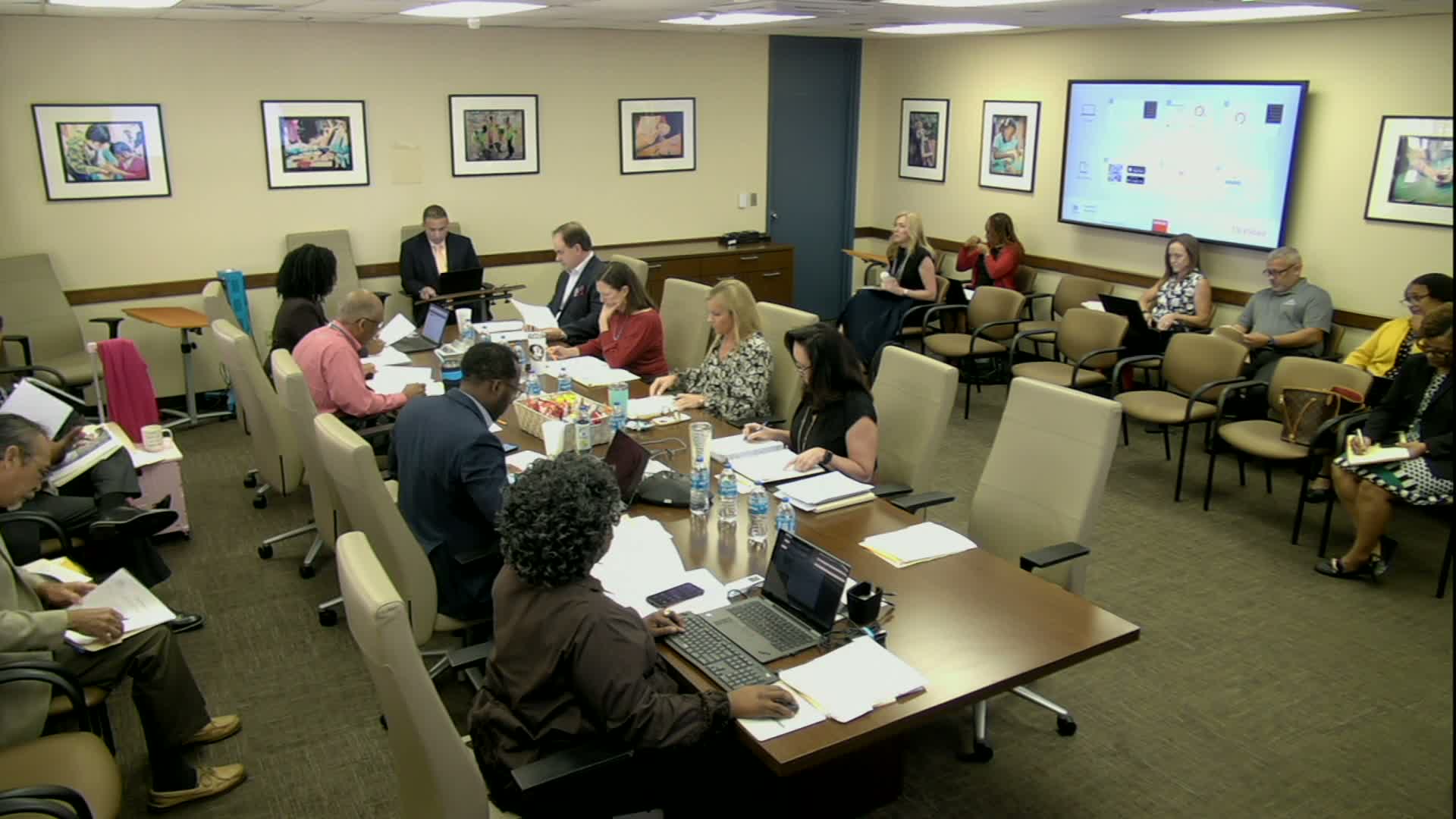
The Duval County School District’s policy handbook review committee on Monday advanced changes to board policy 6.84 — retitled “Fractionization and communication with students and parents” — that tighten rules on staff communication with students and add a ban on accepting vulgar or obscene student work into classrooms.
Staff presented the draft changes and said the new purpose paragraph will place students first. Human resources and the Office of Equity and Inclusion proposed adding two items: an explicit prohibition on receiving work judged vulgar or obscene, and clearer standards for direct communications to parents and guardians and for professional conduct in online posts.
Board members pressed staff on two operational points: whether teachers may text parents from personal devices and how the district will ensure communications become public records. Legal staff and HR said the district’s acceptable-use policy already requires employees to use district-approved applications, partly because communications about public business may be subject to public-records requests. Staff recommended reiterating that requirement in policy and adding a carve-out for emergencies so that a personal-device text in an urgent situation would not be forbidden. They also described planned training at the start of each semester and during January planning days.
On accepting student work, staff said teachers will make an initial determination if material may be inappropriate and may consult curriculum staff or professional standards for complex cases; the policy author and board members agreed additional teacher training and a clearer escalation path are needed.
Staff said they will confirm whether district apps (such as Rooms and Parent OneView) support group messaging and record capture, and will return in January with utilization data and a training schedule. The committee asked that the policy be brought to the full board for a vote in December after those clarifications.
The committee did not take a formal vote at this meeting; staff will update the draft to insert the student-centered purpose, emergency exception language, and training/implementation details before the public-notice period.