Get Full Government Meeting Transcripts, Videos, & Alerts Forever!
Get email alerts on the Temporary Structures topic
No spam. Unsubscribe anytime.
Residents push back on draft temporary‑structure limits; board to refine definition before vote
Summary
Public commenters objected to a proposed definition that would limit temporary structures to 180 days per year; the Planning Board agreed to continue the hearing to Jan. 15 so the definition can be revised and paired with other ordinance changes.
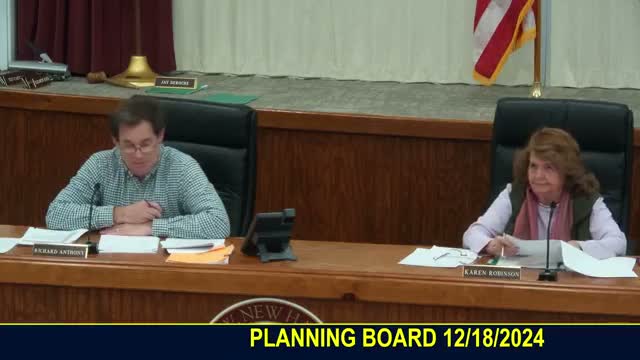
A section of Plaistow zoning that would define and limit temporary structures drew sustained public pushback on Dec. 18, and the Planning Board agreed to continue the hearing to allow staff to refine definitions.
The proposal (part of zoning amendment Z25‑4 and related draft definition work) would explicitly define "temporary structures and uses" — including tents, fabric shelters, portable shelters and construction trailers — and would allow such temporary structures for non‑construction uses for a maximum of 180 days per calendar year. Board members said the change was intended to replace the current overly broad definition of "structure" (which can capture many small objects) and to provide clearer, consistent rules so property owners would know when a temporary permit or a building permit might be required.
Several residents told the board that many private properties already have pipe‑frame 'temporary garages' and similar shelters in place year‑round. Ryan Labrecque (174 Main Street) asked whether existing shelters would immediately become illegal, saying: "They're up year round... If this gets implemented, it's saying that everybody that has one of these up is immediately illegal after 180 days." Other commenters said the proposal would create an HOA‑like regime that limits homeowner choices, while some urged the board to craft exception or variance processes that would allow neighbors to seek relief for legitimately needed structures.
Board members and committee representatives said the definition is still being worked on; they emphasized the intention was to allow temporary sheltering during construction and to provide a limited allowance for other temporary uses, not to criminalize ordinary homeowner activity. Members suggested pairing the temporary‑structure language with a clear and narrow definition of "structure" in the ordinance (a separate item to be discussed) and to develop a path for reasonable exemptions or a conditional/variance process.
Because the definition matters to how Z25‑4 would operate in practice, the Planning Board voted to continue the public hearing and scheduled a follow‑up on Jan. 15, 2025 so the definition and related table language can be refined and published for public review.
What happens next: Staff will draft revised definition language and possible mitigating language (variances or conditional use options) before the Jan. 15 meeting; that refined language will be noticed for public comment.