Get Full Government Meeting Transcripts, Videos, & Alerts Forever!
Get email alerts on the Wetlands Buffers topic
No spam. Unsubscribe anytime.
Plaistow planning board continues contentious wetlands buffer changes after hours of public comment
Summary
Residents and board members clashed over proposed buffer sizes and ballot language for prime wetlands; the Planning Board continued the public hearing to Jan. 15 to align the buffer changes with a map designation and to clarify the voters' guide.
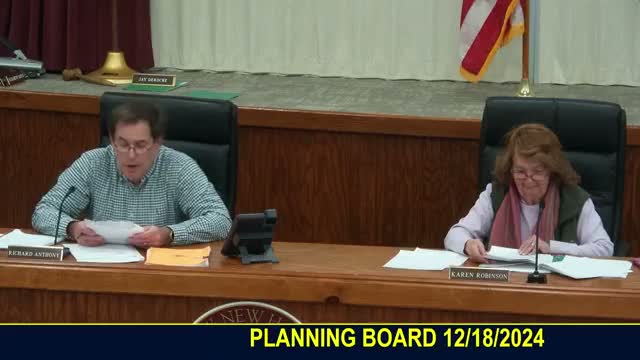
The Plaistow Planning Board on Dec. 18 continued a heated public hearing on proposed changes to wetland buffer setbacks after more than an hour of public comment and detailed questioning from board members.
At issue was zoning amendment Z25‑8, which would revise buffers for "prime wetlands" and related setbacks — the limited‑use buffer, parking and structure setback, and wastewater system setback. The measure's voters' guide initially framed the change as a reduction in some recommended buffer sizes, but several residents said the wording was misleading because the town currently has a placeholder for larger prime‑wetland buffers that have not yet been mapped.
"This whole process has been bastardized," said Brian Labreck, a Plaistow resident, who urged clearer language in the voters' guide and argued the proposal would increase restrictions for some property owners once a map is adopted. Residents said the sequence — placing buffer numbers in the ordinance before designating the specific map locations as prime wetlands — created confusion about whether voters were being asked to expand protections or to relax limits.
Planning board members and staff responded that the draft before voters reflected a compromise from an earlier, larger buffer proposal. A board member summarized the evolution of the text this way: the higher placeholder numbers had been proposed previously (125 feet in some instances) and the current draft reduced those placeholders to the sizes now presented on the warrant. Board representatives also said the Planning Board intends to update the voters' guide language to make clear what the change means relative to both the prior placeholder figures and current default setbacks.
Multiple public speakers urged clearer notice and fuller context in the voters' guide, and asked about the practical impacts — including whether buffers would change property tax or abatement calculations. The board’s liaison reported the assessor had advised that any property tax impacts would be evaluated case by case and would likely be minimal in many situations, but stressed that exact effects would depend on each parcel.
Because of the public concern over wording and the logical link between any buffer changes and the adoption of a prime‑wetlands map (a separate warrant item), the board agreed to continue the public hearing on Z25‑8 to Jan. 15, 2025, to allow staff to refine the voters' guide language, gather legal background, and present the map alongside the buffer proposal.
The continuation gives the board time to present a clearer comparison that shows (a) what buffer numbers were previously included as placeholders, (b) what the proposed buffer numbers would be if the map is adopted, and (c) the practical implications for abutters, the assessor said.
The board opened the meeting to other agenda items after the continuance was set; no final vote on Z25‑8 was taken on Dec. 18.
What happens next: Z25‑8 will return to the Planning Board at 6:30 p.m. on Jan. 15, 2025, at Plaistow Town Hall, second floor, where staff will present revised voters' guide wording and additional materials.