Lifetime Citizen Portal Access — AI Briefings, Alerts & Unlimited Follows
UMass Boston panel: record ocean warming threatens coasts, fisheries and public health, experts say
Loading...
Summary
Scientists and state climate officials at UMass Boston warned that record ocean temperatures and rising seas are accelerating coastal flooding, shifting fisheries and increasing health and insurance risks, and urged rapid emissions cuts, adaptation and community-centered planning.
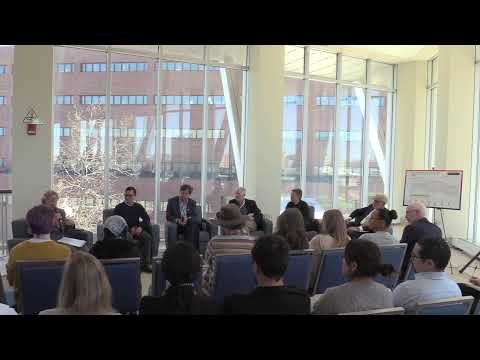
At a UMass Boston panel on ocean warming, climate scientists and state officials on Monday described record-high ocean temperatures, growing local impacts for Massachusetts and a suite of mitigation and adaptation steps they said are urgently needed.
Chancellor Suarez Orozco opened the session by saying the planet is 'dangerously warming' and that warming oceans threaten the climate 'in which civilization first emerged.' Melissa Hoffer, a guest climate official who moderated the event, framed the discussion around recent record ocean-surface temperatures and called the session "a day for learning" about why oceans are warming.
Panelists outlined the science: Bob Chen, interim dean of UMass Boston's School for the Environment, explained that rising atmospheric CO2 acts like a 'heat-trapping blanket' and that Arctic ice loss amplifies warming because darker ocean waters absorb more energy. Edwin Samargo, team lead for the Office of Climate Science within the Massachusetts Executive Office of Energy and Environmental Affairs, added that strong El Niño conditions and the unmasking of previously cooling aerosol emissions are partial contributors but do not fully explain the persistent record-breaking warmth. "It's a complex system," Samargo said, while noting long-term decadal trends.
Speakers cited large-scale consequences for people and economies. The panel quoted global figures discussed at the event — roughly 680 million people living in low-lying coastal areas, about 2 billion in coastal megacities, 3.3 billion depending on fish for protein and nearly 60 million employed in fisheries and aquaculture — to underscore the human stakes. Paul Kirschen, research director for the Stone Living Lab, described local impacts for Boston: more days above 90°F, higher tides and more erosion, and shifts in fisheries (lobster and cod moving north of Cape Cod). He estimated average damage to Boston buildings from coastal storms could be on the order of $1.4 billion by about 2070 and said insurance markets are already reacting: "Insurance rates in Massachusetts are going up about 15% this year," he said.
The panel discussed ocean acidification and coral bleaching. A chemical oceanographer on the panel explained CO2 dissolves in seawater to form carbonic acid, lowering pH and stressing organisms that build calcium-carbonate shells; the panel noted coral reefs face severe risk and that reefs support billions of people economically and ecologically.
On possible responses, Suzanne Moser, a researcher on adaptation and governance, urged a three-part approach: mitigation to reduce emissions, adaptation to prepare communities, and resilience centered on justice and equity. "No one is safe from a destabilized ocean," she said, adding that responses must prioritize communities least responsible for emissions. Panelists recommended both individual actions (public transit, voting) and large-scale investments in renewables and infrastructure. Melissa Hoffer pointed to recent federal legislation (the Inflation Reduction Act) and a state-level proposal referenced at the session called the MASS Leads Act, described by the moderator as a $1.3 billion climate-tech investment proposal.
Audience Q&A highlighted managed retreat, temporary coastal defenses and community impacts. On geotubes (large sand-filled tubes used to slow erosion), panelists described them as temporary measures that can buy time but may worsen erosion nearby and add plastic waste; they urged using interim measures as windows to plan more durable relocations or safeguards. On managed retreat, panelists emphasized the need for buyout programs and community engagement and warned that simply telling residents to leave tends to generate resistance.
The session closed with references to litigation history against major fossil-fuel companies and a call for climate literacy and civic engagement. The moderator recommended Naomi Oreskes' Merchants of Doubt for historical context on industry disinformation and thanked the chancellor and the panel for the conversation.
The panel did not take votes or issue formal policy directives; speakers primarily framed scientific findings and policy proposals and encouraged civic and institutional action as next steps.