Get Full Government Meeting Transcripts, Videos, & Alerts Forever!
Get email alerts on the Natural Hazard Mitigation Plan topic
No spam. Unsubscribe anytime.
Planning commission recommends council adopt county Natural Hazard Mitigation Plan
Summary
The Roseburg Planning Commission voted 4-1 to recommend city council approve CPA‑24‑001, the county-led Natural Hazard Mitigation Plan, citing improved FEMA grant eligibility and regional coordination despite commission concerns about missing line-item cost estimates.
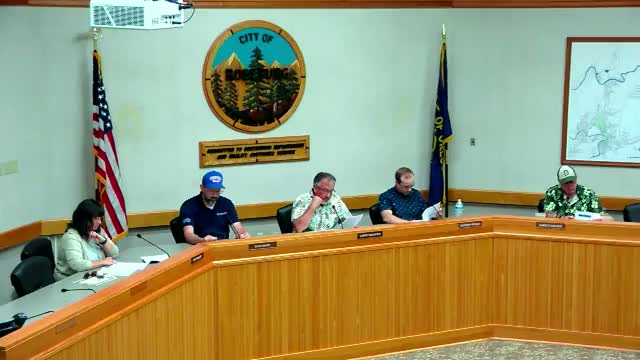
The Roseburg Planning Commission voted 4-1 on July 1 to recommend that city council adopt CPA‑24‑001, the Douglas County Natural Hazard Mitigation Plan (NHMP), a multi-jurisdictional document intended to strengthen preparedness and improve eligibility for federal disaster and mitigation funding.
The vote followed a staff presentation by Andy (city staff), who described the 313‑page county plan as a county-led product prepared with the Douglas County Planning Department, the Oregon Department of Land Conservation and Development (DLCD) and Oregon Emergency Management. "Every city has to adopt it before it can be approved by FEMA," Andy said during the presentation, noting the version before the commission was not final and would include updated dates and ordinance or resolution references prior to final adoption.
Commissioners debated the merits and limits of the plan. One commissioner, pressing for greater fiscal detail, said the document "doesn't look like a plan" and "reads to me like a wish list from a Sears Roebuck catalog," arguing that the lack of dollar figures for identified action items—such as a communications generator on Reservoir Hill—made it difficult to assess long‑term costs. Staff and the presenter responded that the NHMP is designed primarily to document hazards, coordination and high‑level action items to meet FEMA requirements and that many projects would require later design work and specific cost estimates. Stuart (city staff) explained the plan is on a five‑year cycle and can be amended if jurisdictions agree.
Supporters of the recommendation said the plan increases the city's competitiveness for grants and makes Roseburg more likely to receive federal funds should a disaster occur. Chair Jamie Uroguan said the plan's benefits outweigh the concerns, adding, "I don't see a downside personally to it." He also noted that the commission's role is to make a recommendation to city council, which will take the final action.
Following the closed public hearing (no public testimony was offered), Commissioner (unnamed) moved to adopt the findings of fact as presented and recommend that city council approve CPA‑24‑001; the motion was seconded and passed on a 4‑1 vote. The commission will submit prepared findings to city council for its public hearing and final decision.
In other business, staff updated commissioners on the urban growth boundary (UGB) swap, which is scheduled for city council public hearing on July 22, and confirmed the Cow Creek Tribe recently purchased the former Safeway/Payless site downtown; staff said the tribe has not announced plans and any future proposal will be evaluated against existing zoning and permitting requirements.
The commission adjourned the meeting after directing staff to prepare the findings and forward the recommendation to city council.