Get Full Government Meeting Transcripts, Videos, & Alerts Forever!
Get email alerts on the Covid19 Public Health topic
No spam. Unsubscribe anytime.
Arkansas lieutenant governor and UAMS official urge caution on masks, discuss hydroxychloroquine and testing
Summary
In a live Q&A, the Lieutenant Governor and Dr. Cam Patterson of UAMS discussed asymptomatic spread of COVID-19, why masks mostly protect others, the limited evidence and supply concerns for hydroxychloroquine, and return-to-work guidance.
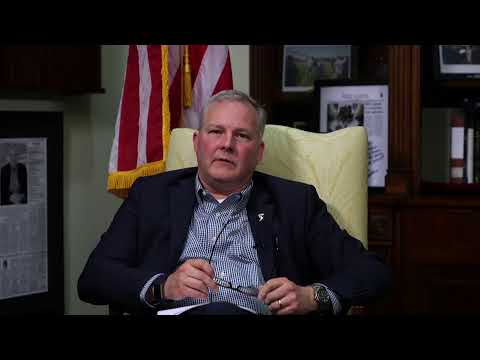
The Lieutenant Governor of Arkansas held a live question-and-answer session with Dr. Cam Patterson, chancellor of the University of Arkansas for Medical Sciences, to answer public questions about COVID-19 transmission, masks, potential treatments and when people can safely return to work. Officials emphasized that asymptomatic and presymptomatic transmission is documented and urged Arkansans to follow social‑distancing guidance.
Dr. Patterson said recent reports that the coronavirus can be spread by simply breathing reinforce why the disease has spread rapidly: "We already knew that people were able to transmit the virus when they were before they were symptomatic even if they never became symptomatic." He told viewers that the public should understand masks primarily as a way to contain secretions. "There's no data that it protects you," he said of common surgical masks, adding that masks "protect other people in case you are secreting viruses."
On professional respirators, Dr. Patterson explained the difference between surgical masks and N95 respirators, noting N95s are more form-fitting and intended for frontline health workers. He and the Lieutenant Governor said conserving N95s for clinical staff is a major reason public-health authorities have been cautious about recommending universal public use while supplies are limited.
The Lieutenant Governor raised an April 1 New York Times report about hydroxychloroquine and asked whether the drug could be useful for COVID-19. Dr. Patterson described hydroxychloroquine (brand name Plaquenil) as a long‑used anti‑malaria and anti‑inflammatory medication now used for lupus and similar conditions. He said the drug’s anti‑inflammatory properties provide a theoretical rationale for testing in COVID‑19 but cautioned about toxicity risks in critically ill patients and urged that supply be preserved for patients who routinely need it for chronic conditions: "Let's make sure we don't take the medicine away from" lupus patients.
On when people can return to work after illness, Dr. Patterson advised that individuals "shouldn't return to work until you are asymptomatic and afebrile for at least 3 days" and recommended checking with a healthcare provider before resuming work. The officials encouraged Arkansans to follow state briefings and guidance from the Arkansas Department of Health and to seek care via available telemedicine and phone lines rather than immediately visiting emergency rooms.
The session closed with a reminder of basic prevention measures—hand hygiene, staying at least 6 feet apart and avoiding unnecessary travel—and with the Lieutenant Governor directing viewers to state resources for financial and health information.
The state’s public-health officials said projections still indicate a rise in cases before a peak is reached and that continued adherence to distancing measures is necessary to avoid overwhelming health care capacity.