Get Full Government Meeting Transcripts, Videos, & Alerts Forever!
Get email alerts on the Education Finance topic
No spam. Unsubscribe anytime.
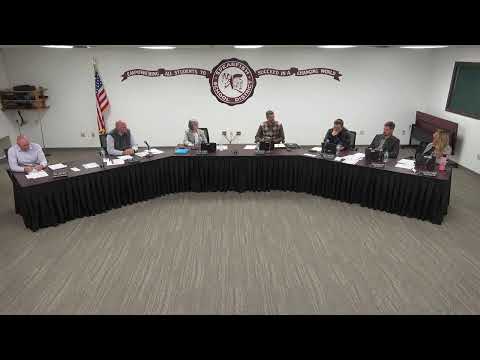
Spearfish school board debates governor's budget and a proposed education savings account plan; no vote taken
Summary
The superintendent reviewed the governor's budget and a proposed $4 million education savings account (ESA) program; board members raised concerns about accountability, potential diversion of state funds, and impacts on local services and asked staff to prepare materials and a potential resolution for a future meeting.
The Spearfish School District's board spent a large portion of its meeting reviewing the governor's budget forecast and discussing a proposed education savings account program that would route roughly $4 million from the unclaimed-property fund to voucher-style scholarships for nonpublic and homeschool expenses.
In a superintendent's update, the board was told the governor recommended a 1.25% increase in public-school funding for the next fiscal year — roughly $11 million to $12 million — while proposing $4 million in ESA funding administered through the Department of Education. "It could be used for students that are going to private schools to help pay for their tuition," the superintendent said, noting the program would be distributed by the Department of Education and administered as a budget line rather than a standalone bill.
Board members expressed concern about accountability and potential effects on district funding and services. One member pointed to state-level cuts in areas such as public broadcasting and the state library and asked whether the ESA proposal could reduce resources relied on by schools and communities. "If you take it from somewhere, it's not going in another place," the superintendent said, summing up the board's funding concern.
Several trustees emphasized the absence of a uniform accountability mechanism for private or homeschool options that would receive ESA funds. The board discussed studies and accountability comparisons and asked the superintendent to circulate supporting materials. "If it's really about a popularity contest, untie my hands," one member said, arguing that publicly funded alternatives should meet comparable standards.
The board reviewed a draft resolution opposing ESAs and discussed next steps; no formal vote on a resolution was taken at this meeting. Members agreed to develop outreach materials that explain the district's strengths and suggested returning the resolution and accompanying advocacy plan to the January agenda for further consideration.
Next steps: the superintendent will assemble documentation (studies cited and an ESA briefing) and the board plans to consider a formal resolution and a proactive communications plan at a future meeting.