Florida Housing Coalition pitches short, data-driven 'housing action plan' for Walton County
Summary
A Florida Housing Coalition representative told Walton County’s Affordable Housing Advisory Committee that a tailored housing action plan can deliver targeted strategies (funding, zoning, public land, partnerships) in about three to four months for roughly $50,000, and recommended integrating local DPZ and commuting data into the plan.
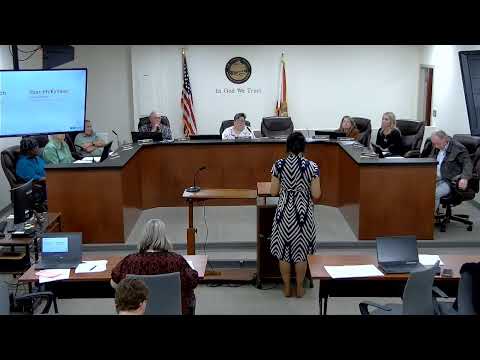
The Florida Housing Coalition told Walton County officials on Nov. 18 that a short, data‑driven housing action plan (HAP) could give the county an actionable roadmap to address affordability, mobility and growth.
"We're a statewide nonprofit," said the presenter from the coalition, describing the group’s role helping local governments with analysis and implementation. He said the coalition’s HAPs combine a deep data dive on wages, affordability and commuting flows with stakeholder engagement and implementation steps for tools such as fee waivers, flexible densities, community land trusts and reservation of infrastructure capacity.
Why it matters: Committee members said Walton County’s mix of tourism, retirement and rural areas poses unique challenges. The coalition’s approach, the presenter said, is to tailor strategies to Walton’s local wage levels and commuting patterns so the county can prioritize where incentives and public land could most effectively support workers and essential staff.
Key details and timeline: The presenter gave an estimate that a HAP typically takes "3 to 4 months" (some discussion placed it at up to "4 to 6 months") and said the work is commonly "in the ballpark of $50,000." County staff contrasted that with a prior DPZ contract that they described as larger in scope ("around $80,000 to $90,000" and longer in duration).
Site selection and local nuance: When members asked whether the HAP would push development away from amenity‑rich "blue" zones to rural "red" zones, the presenter pointed to Marion County examples and emphasized nuance: HAPs usually prioritize proximity to services but can identify rural sites near major thoroughfares that make sense for development and future transit.
Next steps: Committee staff and the presenter agreed to combine existing local studies (including the DPZ work and commuting data showing many residents work outside the county) with the HAP analysis. The presenter offered to share slides and follow up with committee members and staff before a final presentation to the Board of County Commissioners.
The committee did not take a formal vote on adopting a HAP but discussed moving the idea forward for inclusion in next year’s work plan.
AI generated
The text on this page is AI generated. Summaries, highlights, analysis, and video transcripts are all produced from the original source material.
AI can make mistakes, so if you spot one, and we will fix it for everyone.
Note: the source content is unaltered by us. Any content source we link to, be it a video, an audio recording, or a document, is presented exactly as its publisher released it. That publisher is usually a government body, sometimes an individual official or another organisation.