
Tumwater planning staff ask council to place 2025 comprehensive‑plan and development‑code updates on Dec. 16 calendar
Get AI-powered insights, summaries, and transcripts
Subscribe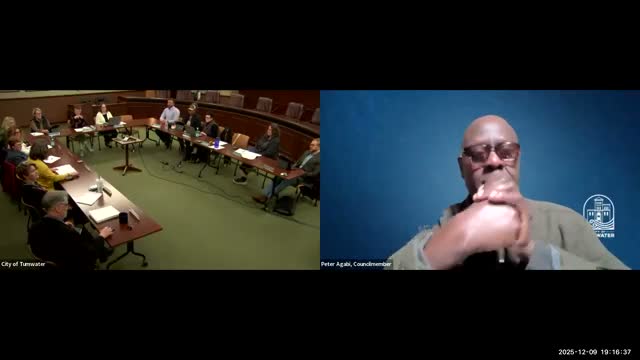
Summary
Associate Planner Dana Bowers and Housing and Land Use Planner Erica Smith Erickson presented the 2025 comprehensive plan and development‑code periodic updates at a Dec. 9 joint session, citing state requirements and describing key changes including a new climate element, expanded housing element, middle‑housing allowances, ADU expansions and parking adjustments.
Tumwater staff asked the City Council on Dec. 9 to place two ordinances — the 2025 comprehensive plan periodic update (O2025‑010) and the 2025 development‑code periodic update (O2025‑011) — on the council’s Dec. 16 consideration calendar so the city can meet state adoption deadlines.
Associate Planner Dana Bowers told the joint meeting that the comprehensive plan periodic update revises data and policy to reflect changes in population, housing and land use and adds a climate element and a more detailed housing element. She said the city received comment letters from the state Department of Commerce and the Thurston Regional Planning Council and that staff have addressed those comments in the staff report.
Housing and land use planner Erica Smith Erickson summarized the development‑code changes that implement state mandates. She said state law requires cities to allow middle housing types in residential zones and to permit two accessory dwelling units per lot where a lot meets minimum size requirements. Erica described the state allowance of up to four units per lot when one of the units is affordable, the list of middle‑housing types to be permitted (duplexes, triplexes, quadplexes, townhomes, cottage housing and others), and the need to limit local design‑review rules so middle housing and ADUs are not more restrictive than primary homes.
Erica also said the maximum permissible size for accessory dwelling units will increase from 800 square feet to 1,000 square feet, that the city will provide preapproved ADU plans, and that conversions of existing nonconforming buildings to ADUs will be allowed provided the converted structure meets current building‑code requirements. Staff discussed updates to parking rules (including allowing tandem parking to count toward minimums and reduced parking near transit) and a co‑living housing definition that replaces the prior boarding‑house language. The staff presentation also added a religious‑sponsored affordable‑housing density bonus for projects that commit to long‑term affordability (80% of area median income for at least 50 years).
Dana and Erica asked the council to put both ordinances on the Dec. 16 calendar so the council can consider adoption before the end‑of‑year statutory deadlines; staff and commission members emphasized the large amount of prior public engagement and the amount of staff time invested in drafting the updates. Councilmembers were reminded that a full council (all members present, in person preferred) will be required at the Dec. 16 meeting to consider adoption.