Get Full Government Meeting Transcripts, Videos, & Alerts Forever!
Get email alerts on the City Budget Uut topic
No spam. Unsubscribe anytime.
South Gate staff warn of $8–9.4M budget shortfall; utility users tax proposed as primary fix
Summary
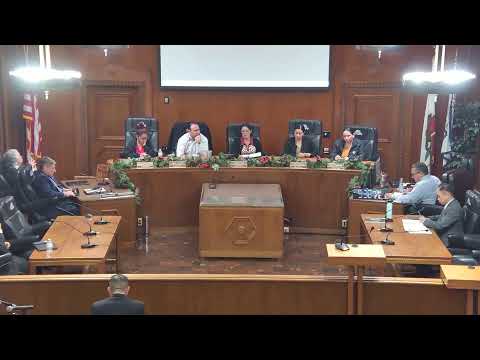
City staff told the Planning Commission the general fund faces an $8–9.4 million structural shortfall and presented options: a voter-approved utility users tax (UUT) that could generate most of the revenue at a 7%–9% rate, or deep cuts that would shutter programs and reduce staffing. Commissioners voted to receive the presentation.
South Gate city staff told the Planning Commission that the general fund faces a projected structural shortfall of roughly $8 million to $9.4 million for the coming fiscal year on an approximately $80 million general-fund budget.
The shortfall and next steps were presented by city staff in a detailed slide presentation and discussion. "The shortfall in that deficit is being projected between 8 and 9,400,000.0 for the coming fiscal year," a staff presenter said during the presentation. Staff and consultants emphasized that prior one-time solutions and reserve use are exhausted and that without new, ongoing revenue the city would have to make service reductions that would affect police, parks, recreation and other community services.
Why it matters: the general fund pays core local services, and staff said existing revenue streams are constrained by state law and allocation formulas. The presenters noted South Gate keeps about 2% of retail sales tax on a typical taxable purchase, while its slice of the property-tax 1% levy is roughly 6% — both comparatively low among neighboring cities. "On a taxable purchase of a $100, roughly $2 of that stays with the city of Southgate," staff said.
Staff outlined two principal paths forward. One is to pursue a revenue measure, principally a utility users tax (UUT). Staff presented modeled revenue estimates showing a UUT in the mid-high single digits would generate significant revenue: roughly $9 million at 7% in staff models and larger amounts at higher rates, with design choices (exemptions, which utilities are taxed) materially affecting yields. "It's a local tax imposed on utility services…100% of that money goes to the city," staff said.
Design and timing: staff explained that a general-tax UUT requires a simple majority at the ballot; a parcel- or special-purpose tax would require a higher threshold. To place the measure on the June election calendar for an election without a council contest, staff said the council must first declare a fiscal emergency (a unanimous vote at the meeting when the declaration is made) and then take subsequent votes to finalize ballot placement. If that timing is not feasible, November is an alternative but would delay revenue and risk service reductions on July 1.
The alternative path is deep departmental cuts. Staff showed an earlier exercise that reached approximately $6.5 million in reductions without eliminating many popular services; a more severe $9 million cut list would include closing the city pool, reducing golf and special events, eliminating or delaying capital projects and reducing staff across community development, public works, IT and other departments. Staff warned that police already consume about 55% of the general fund, so cuts will fall heavily on the remaining departments and will have visible community impacts.
Public reaction and outreach: residents at the meeting voiced strong concerns about past fiscal management and accountability. Chingus Chingus Dominguez said the figures reflect "decades of neglect" and questioned how prior ARPA funds were allocated. Staff responded by offering additional community briefings, online materials, and bilingual outreach (mailers in water bills, social media, FAQs and surveys) to educate voters before any ballot decision. Staff said they will return with a draft cut list and ballot recommendations at the January council meeting and continue public engagement.
Action taken: the Planning Commission voted to receive and file the presentation. The motion passed on a roll-call vote of the commissioners present.
What’s next: staff said a draft $9 million cut plan will be presented at the January 13 council meeting and that if the council directs, staff will begin the balloting and outreach process to place a UUT question before voters. The commission and staff plan further community workshops and bilingual outreach before any final council action.
Quotes: "To maintain the current level of services into the future, the city needs an influx of approximately $10,000,000 annually to bridge that gap," a resident quoted from the handout said during public comment. Gabriel Perez, community development director, later described related planning and code matters in the meeting.
Ending: The commission received the report for the record; staff will provide a revised cut list and options to the council in January and continue public engagement on the potential UUT.