
Task force flags need for new revenue as vendors and workers raise procurement and contract concerns
Get AI-powered insights, summaries, and transcripts
Subscribe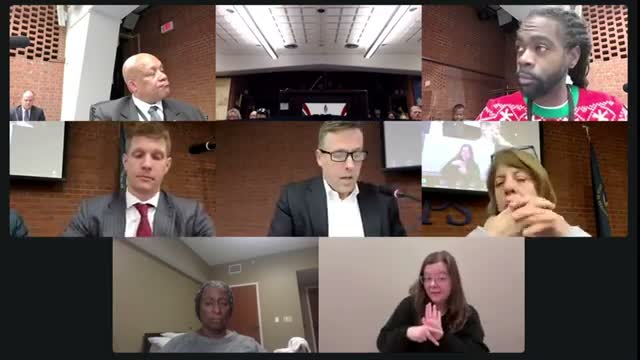
Summary
A revenue task force told the board deferred-maintenance needs may total $2.5 billion and the district must identify $132 million in cuts; public speakers — including enrichment vendors and worker advocates — urged prompt contract approvals and strengthened procurement standards to protect federal funds and worker protections.
The Jefferson County Board of Education heard a Revenue Advisory Task Force update on Dec. 9 that underscored significant budget pressures and a possible need for new revenue, and public speakers raised related procurement and contract concerns.
A board member reported the task force has been reviewing revenue options — including a utility tax, a general property tax increase and a facility "nickel" tax — and concluded new revenue will likely be necessary to address an estimated $2.5 billion in deferred maintenance across the district. The task force also noted the superintendent must identify $132 million in cuts for the coming fiscal year and said members were uncomfortable recommending a tax increase without a transparent accounting of proposed savings and their impacts.
Public commenters tied to contracts and construction urged the board to act on separate procurement and contracting issues. A small-business vendor (identified in the transcript as Beth Bram/Beth Brown) asked the board to approve enrichment vendor contracts that rely on federal funds she said expire in February; she said Family Resource Center contracts must be signed for schools to access those federal dollars. Worker advocates — Rick Hernandez and Chad Button — urged the district to strengthen procurement language to require documentation that subcontractors maintain background checks, drug testing policies, workers' compensation, insurance and safety training. Button said an open-records request for the WEB Du Bois Academy project returned subcontractor lists but not the workforce-compliance documentation he requested and argued the current procurement language uses permissive phrasing ("may require") that leaves protections unenforced.
Board members acknowledged the range of fiscal pressures described by the task force and heard requests to tighten procurement standards and to ensure federal enrichment funds are not lost because contracts remain unsigned. No new revenue decision was made; the task force intends to continue work and return with more detail after the Jan. 2026 meetings.