Get Full Government Meeting Transcripts, Videos, & Alerts Forever!
Get email alerts on the Eviction Hud Covered Person topic
No spam. Unsubscribe anytime.
Appeals court hears challenge to eviction where tenant's son was labeled a 'guest' under HUD rules
Summary
In CMJ Management v. Rodensky, appellants contest a housing court eviction relying on HUD definitions of 'guest' and 'person under tenant's control'; defense says consent may be passive and evidence supported the judge's finding. The court took the case under advisement.
At oral argument in CMJ Management v. Rodensky, counsel for the tenant argued the landlord failed to prove the tenant's son qualified as a covered person under HUD rules that permit eviction for covered persons' criminal conduct.
Counsel for the tenant (identified in argument as Attorney Yox) said the federal definition of a "guest" presumes a temporary stay and that frequent daytime visits do not necessarily make a person a guest or a person "under the tenant's control." He stressed the notice to quit cited "guest" language and argued the trial record lacked findings that the son was invited or under the tenant's control at the time of the criminal act.
David Klabinoff, counsel for CMJ Management, urged a broader reading. He argued HUD and related precedent treat consent as capable of being passive and that tenants should be accountable for people they "consent" to have on site; "This 1 strike policy made it quite clear," he said, "conduct by the tenant itself is not the only basis for eviction." Klabinoff maintained the notice and trial findings established a lease violation and that any sloppiness in wording did not prejudice the landlord.
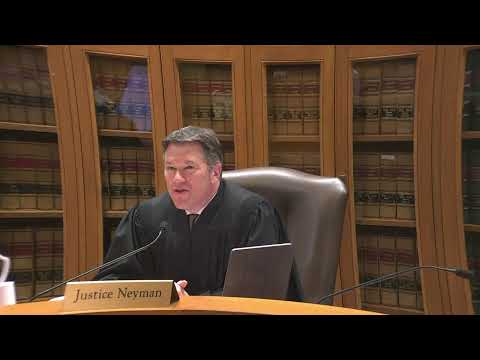
Justices repeatedly probed whether frequent visits and other testimony could reasonably support a finding that the son was a guest or under the tenant's control. They also examined post‑assault conduct, including the tenant bringing the son home after an initial court appearance, and whether that conduct bore on the covered‑person analysis.
The court took the matter under advisement at the close of argument.