Get Full Government Meeting Transcripts, Videos, & Alerts Forever!
Get email alerts on the Land Use Variance Review topic
No spam. Unsubscribe anytime.
Appeals court weighs whether Board of Health's inaction can trigger certiorari or mandamus in zoning dispute
Summary
In De Oliveira v. La Lumiere, appellants argue a Board of Health-issued variance-related permit deprived them of statutory review under M.G.L. c.40A and that the board's failure to act constitutes a quasi-judicial proceeding warranting certiorari or mandamus; appellees counter that absence of a proceeding cannot supply that element and enforcement was discretionary. The court took the case under advisement.
May it please the court, Matthew Dunn, on behalf of the appellants, Shannon D'Oliveira and Anthony D'Oliveira, told the panel the key issue is whether review mechanisms in the zoning statute apply when a Board of Health issues a land‑use permit and then declines to act.
Dunn said the case turns on the practical effect of that choice: because the variance was issued by the Board of Health rather than the zoning board, the statutory paths for judicial review (he cited M.G.L. c.40A, sections discussed in his brief) are unavailable, leaving aggrieved neighbors without an established remedy. "I think the main issue in this case, your honors, is that this pertains to a, the wrong municipal entity issuing a variance, for that relates to land use," Dunn said.
The appellants press both certiorari and mandamus. Under Dunn's theory, the absence of any hearing or enforcement by the Board of Health can, in context, satisfy the quasi‑judicial element for certiorari and, if necessary, permit a court to retain jurisdiction to assess compliance and require a certificate of compliance process. He emphasized the owner's admission of noncompliance with variance conditions and the continuing harm to abutters, noting the variance issued in 2015 and that problems were first reported in 2016.
Appellees, through counsel Noemi Kawamoto, urged a narrower reading. Kawamoto argued certiorari corrects errors in proceedings and that "where there's no proceeding, there's no error to correct," stressing that enforcement under the Board of Health bylaws is discretionary and pointing to pending Superior Court suits where summary judgment briefing is scheduled. She told the court the town reasonably declined to step into matters already subject to litigation.
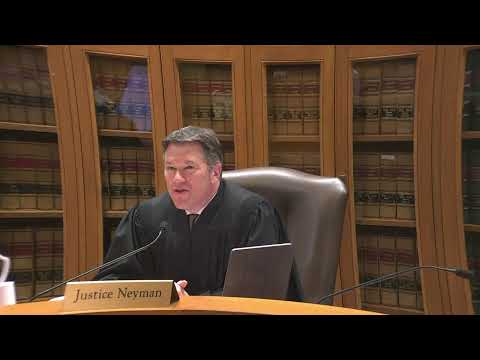
Justices pressed both sides on remedy and policy. A justice asked whether mandamus would lie if the Superior Court suits failed to provide relief; counsel acknowledged the answer could depend on the factual record and whether a clear statutory duty existed. At one point a justice summarized the practical concern: "In effect, the town's telling the victims of this to go pound sand," underscoring the tension between statutory discretion and the real‑world impact alleged by the neighbors.
The appellants asked the court to treat the Board of Health's nonaction as a legal defect that permits court‑ordered review and a compelled certificate of compliance process; appellees maintained that mandamus requires a clear legal duty and that the Board's discretion precludes compelled action on these facts.
The court took the matter under advisement and submitted the case for decision.