Lifetime Citizen Portal Access — AI Briefings, Alerts & Unlimited Follows
Anacortes planning commission backs Port’s West Basin framework and shoreline permit, with conditions
Loading...
Summary
The Planning Commission unanimously recommended City Council approve the Port of Anacortes’ West Basin framework development plan and shoreline substantial development permit, with modifications requiring the final framework and exhibits be recorded and a recommended 15‑year expiration; commissioners pressed the Port on the dog park, building heights, traffic and stormwater.
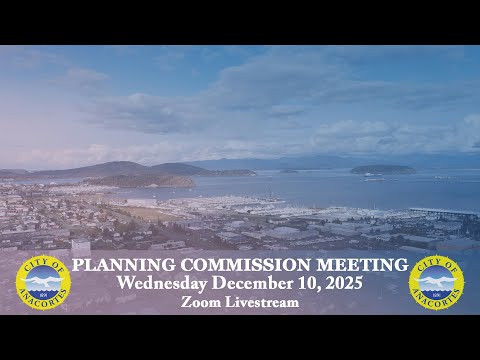
The Anacortes Planning Commission on Dec. 10, 2025 recommended that City Council approve the Port of Anacortes’ West Basin framework development plan and a shoreline substantial development permit, subject to staff’s 16 conditions as modified to require recording of the final framework plan with attached exhibits, reference to SEPA review, and an explicit 15‑year expiration period.
The recommendation, moved by Commissioner McCombs and approved unanimously by commissioners present, follows staff and applicant presentations describing a mixed‑use upland redevelopment intended to connect the North and West basin waterfronts to downtown, preserve heavy‑haul truck access and create building pads for future private development. John Demos, executive director of the Port of Anacortes, said the framework is meant to "create development pads for private sector to come in, and...bring economy and jobs to that area," and that the project builds on concept planning stretching back to the 1980s.
Why it matters: the framework and shoreline permit would enable road realignments (including a Market Street/9th Street reconfiguration), grading and utility work, a proposed waterfront park, and graded building pads for future construction. The Port and consultants told commissioners the plan is intended to protect the heavy‑haul route needed for industrial cargo while adding public, water‑facing access and an event facility to anchor future private development.
Key details: staff described shoreline jurisdiction (roughly 200 feet from the ordinary high water mark) and the shoreline master program standards that the permit must meet, including no net loss of ecological functions, vegetation restoration and public access. Pollard recommended adding a condition to ensure the final recorded framework includes a project summary, SEPA reference, a list of exhibits and an explicit 15‑year expiration for the recorded plan. The Port said the event facility is budgeted at about $8 million and that the Port’s direct redevelopment investment around the event facility is currently estimated at about $9 million in today’s dollars. The Port cited prior city council approvals and interlocal agreements (including a July 2024 9th Street vacation and a June 2025 interlocal agreement) as steps that support implementation.
Public input and local concerns: nearby resident Jamie Martin, who said she lives about a block away, urged the Port to retain the temporary dog park at least until a developer for that land is identified. The Port responded that the temporary dog park is not intended as a permanent waterfront use and that planned public, water‑facing open space and the event facility are the Port’s approach to maintaining public access while developing the site.
Commissioners’ questions focused on potential building heights, traffic and crossings, and stormwater/sewer capacity. Staff said base building height in shoreline jurisdiction is 35 feet with a possible 50‑foot maximum under bonus provisions that require meeting code incentives; the availability of bonuses within the shoreline band depends on permitted uses and code limits. On traffic, staff and the Port cited a professional traffic impact study and city concurrency standards; the Port noted a partnership with Public Works and planned near‑term pedestrian safety investments including two lighted crosswalks south of 11th Street. On drainage, staff said the site is on fill and preliminary stormwater reports were reviewed as flow‑control exempt because outfall is proximate to Fidalgo Bay; sewer and other concurrency metrics will be reviewed when specific uses and building permits come forward and must be mitigated if capacity issues are identified.
Next steps: the Planning Commission’s recommendation will be forwarded to City Council, which is the final decision maker for Type 4 shoreline substantial development permits and framework development plans. The commission’s motion and its roll‑call vote (all voting members present voting yes) are part of the hearing record.