
Witnesses warn of 'shadow fleet' risk to undersea cables and pipelines
Get AI-powered insights, summaries, and transcripts
Subscribe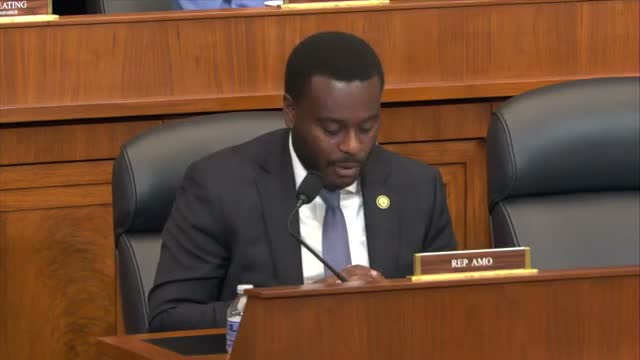
Summary
Members and witnesses told the subcommittee that undersea cables and pipelines are an acute hybrid-warfare vulnerability; they recommended NATO operations, intelligence sharing, and steps to track and impose costs on vessels suspected of participating in sabotage.
Lawmakers and witnesses at a House Foreign Affairs subcommittee hearing singled out undersea infrastructure — fiber-optic cables, subsea pipelines and related maritime assets — as a priority weakness in Europe and the transatlantic system.
Representative Amo asked witnesses how sabotage of undersea infrastructure undermines European security. Laura Cooper responded that Russia is “trying to probe potential weaknesses in the Western alliance,” noting that undersea cables and energy links are often paired with cyber effects and therefore require full-spectrum defenses.
Cooper said NATO has increased Baltic-area operations to deter attacks on subsea assets and recommended policies to improve resilience, intelligence collection and the ability to track and interdict so-called 'shadow fleet' vessels that have been linked in open-source reporting to undersea cable incidents. She told the committee that policy options range from improved maritime domain awareness to measures that target administrative support and flagging that enable suspicious vessels to operate.
Members pressed for more pre-authorized allied responses so governments are not forced into reactive modes when infrastructure is damaged. Witnesses said coordinated reporting, clearer allied response frameworks and expanded intelligence sharing would reduce the window for covert actors to cause damage and escape detection.
There was no formal action or new funding announced in the hearing. The witnesses recommended executive branch and allied operational steps, and members signaled interest in follow-up oversight and potential legislative proposals to strengthen undersea infrastructure protections.
The hearing record did not include operational details or specific pending interdiction actions; witnesses recommended further classified and unclassified coordination between allied partners.