
House panel hears warnings of Russian, Chinese 'hybrid' warfare and urges transatlantic resilience
Get AI-powered insights, summaries, and transcripts
Subscribe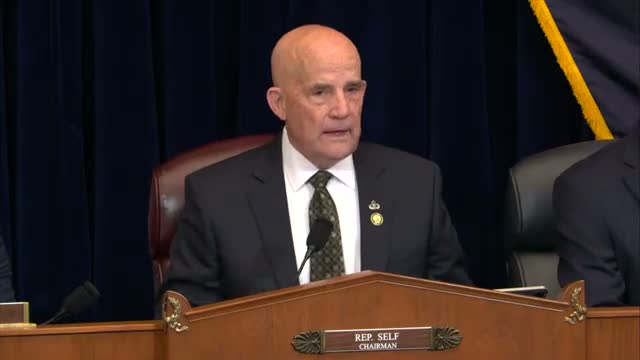
Summary
Witnesses told a House Foreign Affairs subcommittee that Russia and China are conducting complementary 'hybrid' campaigns — cyberattacks, sabotage and information operations — that erode European cohesion and U.S. interests; they urged steps to reduce critical dependencies, strengthen NATO deterrence and raise costs for malign actors.
A House Foreign Affairs subcommittee hearing opened with a stark assessment: “Ladies and gentlemen, we are at war,” the committee chair said, framing Russia and China’s activity in Europe as a persistent, multi-domain campaign.
Experts from think tanks and former defense officials testified that the Kremlin’s and Beijing’s tactics now blend military, covert and economic measures to undermine NATO cohesion and Western resilience. Craig Singleton of the Foundation for Defense of Democracies said China’s approach “is best understood as a campaign to shape European decisions before a crisis” and described a three-part Chinese playbook of penetration, prepositioning and pressure through commercial deals, research ties and critical supply-chain placement.
Christopher Walker of the Center for European Policy Analysis said Russia’s “shadow warfare” aims to destabilize targets without provoking conventional military reprisal, citing recent sabotage of rail and energy infrastructure and an alleged assassination attempt tied to Moscow’s broader campaign. “Russia’s shadow warfare represents a crucial dimension of Moscow’s playbook,” Walker said.
Laura Cooper, a former Pentagon official and Georgetown adjunct, told the committee that investigators have linked “well over 100 acts of sabotage and attempted attacks in Europe since 2022,” including damage to rail lines, cyber intrusions with physical effects and attacks on warehouses and pipelines. Cooper urged a combined approach of sanctions enforcement, intelligence sharing and bolstered NATO operations to deter further hybrid attacks.
Witnesses called for concrete policy steps. Singleton proposed three priorities: treat China’s hybrid activity in Europe as a frontline strategic challenge, help European partners reduce dangerous dependencies (ports, telecom networks, critical minerals and data centers) and raise the costs for companies and entities that materially support Russian aggression. Walker recommended strengthening transatlantic reporting and coordinated countermeasures against covert influence and malign financing.
Members pressed witnesses on how to respond without eroding civil liberties at home. Several lawmakers cited concerns about artificial intelligence and social media platforms, with witnesses warning that AI-powered disinformation can amplify influence campaigns and urging Congress to scrutinize technology export approvals and platform governance. Members also raised undersea infrastructure as an acute vulnerability; witnesses recommended NATO coordination and intelligence to track and deter so-called shadow-fleet activity.
The hearing closed with the chair saying members may submit additional questions for the record and noting a classified briefing with the secretary of state would follow.
The committee did not vote on legislation during this session; witnesses provided recommendations for executive and congressional action to harden infrastructure, improve allied coordination and impose targeted costs on actors who sustain hybrid campaigns.