Citizen Portal

Residents and developers urge Milwaukie council to adopt ordinance to retain state MIRL housing dollars

Milwaukie City Council · December 3, 2025

Get AI-powered insights, summaries, and transcripts

Subscribe
AI-Generated Content: All content on this page was generated by AI to highlight key points from the meeting. For complete details and context, we recommend watching the full video. so we can fix them.

Summary

Dozens of residents, a pastor-seller and developers urged Milwaukie council to adopt an originating ordinance to participate in the state Moderate Income Revolving Loan (MIRL) program so the city can remain eligible for roughly 44 affordable for-sale homes and future allocations; councilors asked for more detail on staffing, legal risk and timing before committing.

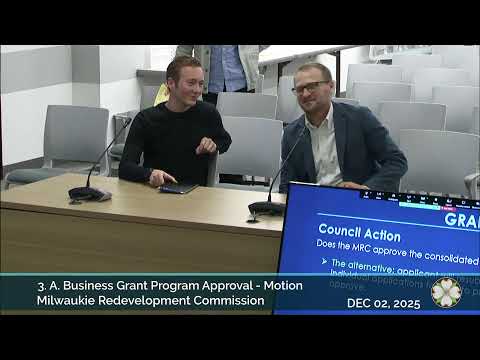
Dozens of residents and housing advocates urged the Milwaukie City Council on Dec. 2 to adopt an originating ordinance that would keep the city eligible for a state Moderate Income Revolving Loan (MIRL) program and a proposed Lynnwood affordable-home development.

Supporters said the fast-moving state program is first-come, first-served and that delay could cost Milwaukie access to an initial allocation of about 44 affordable for-sale homes. "If we don't act, those units will go to a city that is actually willing and ready," said Tyler King, a local realtor who said the average home price in the ZIP code was about $517,000 in October.

The case for urgency came from a mix of personal testimony and project specifics. Brianna Diamond, a 26-year-old resident, told the council she makes too much to qualify for low-income housing but cannot afford a down payment and warned that continued delay risks homelessness for people living paycheck to paycheck. Bruce Gruntz, pastor of Milwaukee Covenant Church and seller of a Linwood property tied to the proposed project, said the city—s risk under the MIRL program would be limited to a loan for the land purchase; he urged the council to adopt the ordinance so the city would not miss "a decade" before the money is available again.

Supporters repeatedly emphasized that the originating ordinance does not itself commit Milwaukie to spend city funds or to pick a specific project; rather, it keeps the city "at the table" with the state agency so projects that meet program rules can move forward. That framing was emphasized by Tyler King: "It does not commit Milwaukie to spending municipal dollars. It simply keeps us at the table with OHS so we don't miss out on 44 affordable for-sale homes in the near term and more down the road."

Councilors asked staff and speakers detailed follow-up questions about implementation: how long the city—s review and permitting processes take, what staff capacity the program requires, how the state helps with program onboarding, and what financial exposure the city might face if a developer fails. Developer Austin Turner asked for clarity on the city—s staffing analysis and whether other jurisdictions implementing MIRL had been consulted. Several council members said those technical questions remain open and that staff would bring additional detail at a subsequent meeting.

The mayor and staff told the public that, under city practice, staff will not respond to community comments during the same meeting; instead, the city manager would provide follow-up at the next meeting for items requiring action.

What happens next: Councilors signaled sympathy with speakers— urgency but also asked for legal and operational clarifications before making a final decision. Staff indicated they would return with answers to specific questions—about staffing needs, contractual risks and the sequence of required intergovernmental agreements—before the council takes a formal vote or adopts code language.

Notes: Testimony and project details came from residents, the pastor-seller of the Lynnwood parcel, local realtors and a developer who spoke during the public comment period. The council did not take a final vote on an originating MIRL ordinance during the Dec. 2 regular session.