Get Full Government Meeting Transcripts, Videos, & Alerts Forever!
Get email alerts on the Capital Planning topic
No spam. Unsubscribe anytime.
Medford Public Schools reviews $2.5M FY27 capital priorities after FCA and MSBA approvals
Summary
District staff reviewed a facilities condition assessment showing $60–$70 million in needs, reported MSBA approval of three roof and HVAC projects, and recommended a FY27 capital package of about $2.5 million focused on ARP feasibility studies and high-priority safety work. Theresa DuPont of the city’s CPC said a playground feasibility study could be eligible for CPA funding but likely at a lower cost than initially estimated.
Medford Public Schools staff and school committee members met remotely on Nov. 20 to refine the district’s capital priorities after a new facilities condition assessment (FCA) identified roughly $60–$70 million in repair and upgrade needs over the next five years. The meeting focused on prioritizing Accelerated Repair Program (ARP) items, sequencing studies that unlock larger projects, and aligning the district’s FY27 ask with municipal funding processes.
District staff reported that the Massachusetts School Building Authority (MSBA) has accepted three statements of interest for roof and HVAC projects at three elementary schools (referred to in the meeting as Mississauga, Roberts and Brooks), advancing those projects into the MSBA pipeline. Staff said those MSBA approvals will affect the district’s local sequencing and which projects are best to advance with town-held ARP or local capital funds.
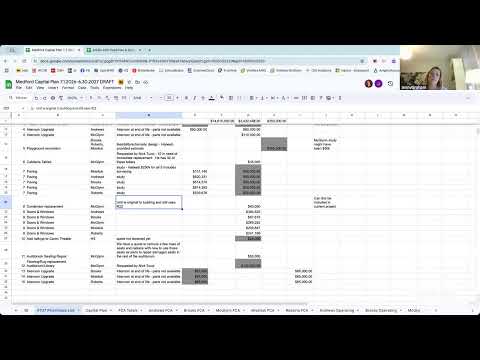
Ken (first referenced as Ken at the start of the spreadsheet walkthrough) led a detailed tour of a capital-planning spreadsheet that imports the FCA data into school-specific tabs and categorizes items by funding source and urgency. He told committee members he had separated work into ARP projects (which require feasibility and schematic design before construction), operating/maintenance items that could be done from the extraordinary repairs account or regular maintenance, and larger capital needs that require study and phased funding. He described the ARP items as the highest near‑term priority and said the district’s near-term list of priorities totals roughly $2.5 million for FY27 or the soonest usable time frame.
Ken singled out end-of-life fire alarm systems at five buildings as a high-cost, high-priority item: “You need schematic plans done. You need code review. It’s not something we could write a specification up for ourselves,” he said, and noted a preliminary design estimate of about $225,000 to design the replacements for all five schools, with total replacement costs “north of $400,000” at some sites. He also described intercom upgrades at Andrews and McGlynn as a safety concern and noted a McGlynn walk-in cooler condenser that still uses phased-out R-22 refrigerant and likely needs separate contracting.
On information-technology work, staff reviewed a two‑phase network refresh that was originally proposed as a single $1.5 million project and later split across fiscal years. Ken said the project is an E-rate-eligible undertaking and that E-rate typically reimburses a substantial share of eligible costs (Ken described the district’s local share as roughly 40 percent after reimbursement). Committee members pressed staff on whether the district’s portion of phase 2 is already allocated in current or future budgets.
Playground renovation was a major topic. Ken proposed a single feasibility study to examine options for three elementary playgrounds (Brooks, Roberts and the school referred to as Mississauga/Missatuck in discussion). Theresa DuPont, the city’s Community Preservation Act (CPA) manager, joined the call and advised that a $350,000 estimate for a single multi‑school feasibility contract “seems a bit high” and said past similar work would likely be closer to $200,000. DuPont explained CPA eligibility constraints: CPA can fund the outdoor‑recreation portions of projects that serve a public benefit, but it would not fund creation of parking areas under a playground; eligibility determinations are made through the CPC’s pre‑application/eligibility process.
Committee members discussed sequencing and fairness — for example, whether to stagger studies and construction so work and funding are distributed across schools rather than concentrating upgrades at one site — and whether some work could be handled within operating budgets or the extraordinary repairs account instead of capital allocations. The group also discussed whether Medford’s Department of Public Works could perform some paving and parking repairs versus contracting the work; staff said Freedom Way is now a city street and that DPW is planning improvements but that city backlog and capacity remain a consideration.
The committee asked staff to return with two products before school‑committee presentation: (1) a status update of previously funded or in‑progress capital items, and (2) a recommended FY27 prioritization with a short visual explainer of the capital‑planning process and funding buckets to make presentation to the full School Committee clearer. Staff said the subcommittee will aim to present on Dec. 15, using a Dec. 8 subcommittee slot if more time is needed. The meeting concluded with a motion to adjourn that passed by roll call (three in favor, zero opposed).
What’s next: staff will refine cost estimates (including cost-per-square-foot assumptions used for MSBA ARP calculations), confirm which FY27 local funds are available for the district share of E-rate and ARP projects, and draft a memo for CPC staff to gauge whether the playground feasibility approach fits the CPA’s eligibility and review timeline.