Get Full Government Meeting Transcripts, Videos, & Alerts Forever!
Get email alerts on the Potomac Edison Derms Ami topic
No spam. Unsubscribe anytime.
Potomac Edison warns non‑AMI territory complicates Green Button rollout; proposes limited registry and third‑party interim solutions
Summary
Potomac Edison told the PSC it lacks AMI and a DERMS, favors a cautious, enterprise approach, and recommended limited public registry access citing privacy concerns; it said interim integrations and contracted edge‑DERMS can meet near-term program requirements.
Potomac Edison officials said their conceptual report recommends maintaining flexibility in technology choices and relying on enterprise or third‑party solutions in the near term rather than an immediate, Maryland‑only utility DERMS investment. "To be clear, at this point, Potomac Edison does not have a DERMS, either a grid or an EDGE DERMS, and is not on our horizon right now for investment," an attorney for the company said.
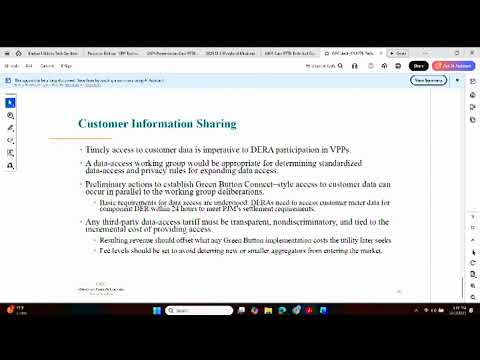
The company explained it lacks advanced metering infrastructure (AMI) across its Maryland service territory, so interval data and Green Button Connect use would be costly and show low utilization for bi‑monthly reads. Potomac Edison said it uses an internally developed DER database (FirstEnergy solution) that can integrate with PJM or a state hub, but argued any external registry should limit publicly available data to staff and commission use because of customer privacy concerns.
Why this matters: Utilities and third‑party aggregators need timely interval and device data to participate in FERC 2222 markets in 2028. Utilities that lack AMI face extra costs and alternative interim approaches must be identified so aggregators can still access the information required for settlement and double‑counting checks.
Near-term fixes proposed: Potomac Edison offered to provide DER registration data from its IntellioConnect interconnection system on a file‑export basis to meet immediate needs. The company also suggested contracted edge‑DERMS and third‑party platforms for pilot use, while cautioning that full utility-only DERMS would be a multi‑year, high‑cost investment and that enterprise approaches spread across companies lower per‑utility costs.
Commissioners pressed the company on Maryland‑specific commitments; Potomac Edison and FirstEnergy representatives said corporate support exists for VPP participation generally but that state‑specific investments would require enterprise buy‑in and cost‑benefit justification.
Next steps: Potomac Edison recommended developing a data access tariff and coordination with PJM’s forthcoming DER hub requirements; commissioners asked staff to explore interim file‑export solutions and how to bring non‑AMI utilities into the statewide data architecture without imposing disproportionate cost burdens on their customers.