
Advisory committee presses for evening meetings, better paratransit and clearer local‑state coordination
Get AI-powered insights, summaries, and transcripts
Subscribe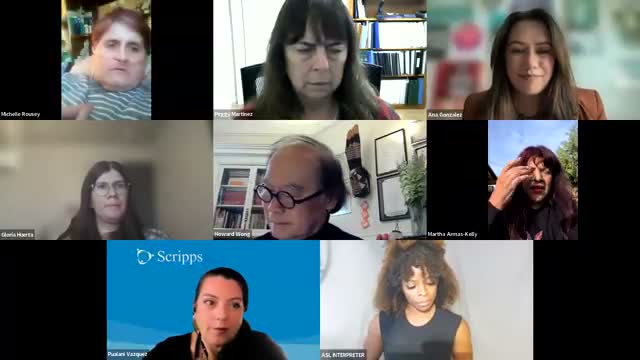
Summary
Members urged the committee and state agencies to make meetings and programs more accessible — including occasional evening convenings, clearer local contact points for Caltrans, and attention to disparities in WAV/paratransit availability and medical transport costs.
Members of the Interagency Transportation Equity Advisory Committee used the Dec. 16 meeting to press for more accessible meeting times and for stronger coordination between state agencies and local jurisdictions.
Pualani Vasquez told the group that Caltrans had announced recruitment for a community advisory board, and Vice Chair Anna Gonzales and other members said scheduling is a barrier for community participation. Chair Martha Armas Kelly and several members suggested exploring occasional evening meetings or community convenings — while acknowledging staff and logistical constraints.
The committee also discussed mobility gaps for people with disabilities. "WAVs are the kinda like it's an Uber, but we're for wheelchairs," said Michelle Roussy, noting an open bid in Alameda County and widespread disparities in service availability. Members described long waits and service unreliability in some counties.
Committee members raised the practical barriers small medical‑transport providers face. Chair Martha Armas Kelly recounted a case in which a person traveling from the Central Valley to Los Angeles for specialized surgery was, she said, "paying upwards of $500 every time that they go," a cost tied in part to insurance and contracting requirements that limit smaller providers from billing insurance.
Members also sought clearer routes for local jurisdictions to reach Caltrans districts on truck route and circulation‑element questions tied to AB 98. Anna Gonzales said local collaboration "is not happening" in some places and asked for a commitment to convening district‑level roundtables; Alejandro Espinosa offered to connect Caltrans staff with local contacts.
Caltrans deputy director Naila Pokharden acknowledged staff constraints for evening meetings and said she and agency staff will work with CalSTA to improve communication channels. The committee captured feedback for further discussion in 2026 and adjourned.