Get Full Government Meeting Transcripts, Videos, & Alerts Forever!
Get email alerts on the Transportation Bikes topic
No spam. Unsubscribe anytime.
Mesa council discusses 15 mph shared-path limit, proposes 5 mph cap for e‑bikes in parks
Summary
At a Dec. 8 study session, staff recommended keeping a 15 mph limit on shared-use paths and adding a 5 mph e-bike speed limit specifically for park properties; council members raised enforcement questions and noted a related state senate bill.
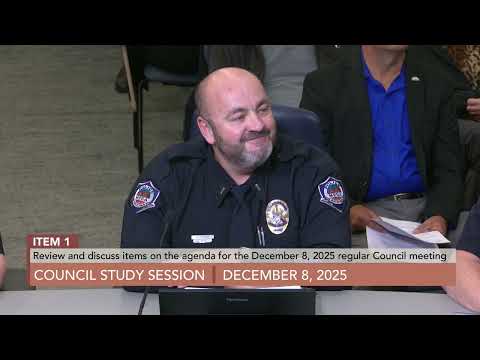
Mesa’s City Council spent substantial time in a Dec. 8 study session debating proposed speed limits for e‑bikes and shared-use paths, with staff urging a two-tier approach and council members pressing on enforcement and consistency with other jurisdictions.
Staff told the council the code revisions would "keep the speed limit of 15 miles an hour on a shared use path that's in existence now and add a speed limit of 5 miles per hour for ebikes on park properties," describing the 5 mph restriction on park property as the new element in the proposal. The vice mayor said earlier conversations with stakeholders and an internal test ride at the proposed speed gave him confidence the slower speed is manageable while preserving public safety.
Several council members expressed reservations. "I still find 5 miles a little slow," said a council member who asked for the provision to be reconsidered if it proves unreasonable in practice. Another council member described enforcing a 5 mph rule in parks as an "enforcement nightmare," asking whether the city would station officers or use other tools to monitor compliance.
City staff replied enforcement would be complaint-driven and emphasize education rather than constant patrols. A staff member said officers would respond when complaints or criminal damage were reported and that park rangers and an upgraded park-ranger program could be used to focus compliance efforts. Staff also said LIDAR equipment can detect low speeds and that education would be the primary first step.
Council members also raised consistency concerns. One member cited constituent requests to permit higher speeds (for example, 20 mph) on shared-use paths used for commuting, while staff said 15 mph remains a common standard for shared-use paths and that shore-up comparisons with neighboring cities would be provided. The staff discussion referenced a recently introduced state senate bill that staff said appeared aligned with the local proposal; the transcript’s reference to a "50 mile per hour" figure in describing that bill appears inconsistent with context and is noted in reporting as an apparent transcription or phrasing error.
The council did not take a final vote in the study session. Members said they could amend the ordinance later if real-world usage or enforcement concerns warrant changes, and they stressed the importance of public education and targeted enforcement resources such as park rangers. Next formal consideration will be on the council agenda subject to the standard process for ordinance hearings.