Leawood advances flood‑mitigation work: Pawnee bypass recommended, watershed study contract approved
Loading...
Summary
Council and staff advanced plans to address recurring flooding in the Winonga/Indian Creek area, favoring a Pawnee bypass alternative that would divert runoff (estimated project cost ~$4.8–5.0M with 75% county participation) and unanimously authorized a separate contract with consultant Olson to develop an Indian Creek Watershed master plan and options analysis (approx. $90,000).
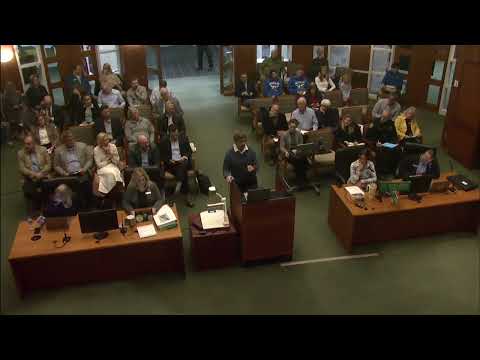
Leawood officials provided updates Dec. 15 on engineering work to reduce recurring flooding along Winonga/Indian Creek and on a proposed watershed master plan.
Public Works staff reviewed a multi‑alternative study that narrowed options to three feasible approaches: subsurface detention, a Pawnee bypass that redirects flow under Pawnee (recommended by staff and the Stormwater Committee), and a parallel pipe system that would require more intrusive work on the golf course. Staff said the Pawnee bypass (a roughly 60‑inch bypass pipe collecting runoff near 127th) reduces flow into Winonga and the golf course channels and carries a preliminary estimate just under $5 million; staff indicated typical county cost‑share rules could yield about 75% reimbursement of eligible costs, leaving the city responsible for roughly 25%.
The Stormwater Committee recommended Alternative 2 (Pawnee Bypass) as the preferred option to present to the Iron Horse Golf Course ownership during scheduled discussions. Staff said design would need to proceed in early 2026 to be ready for construction in early 2027 if approvals and easements are secured.
Separately, council unanimously approved a contract with consultant Olson to develop an Indian Creek Watershed master plan that will examine multiple subareas of the city, develop 2–3 options per location with cost estimates, and include public outreach and property‑owner meetings. Staff described the watershed contract as a first step toward coordinated projects, updated FEMA mapping and cost‑benefit prioritization across Leawood’s portions of the overall watershed.
Council members thanked the committee and staff for their work and asked that staff return with a recommended alternative, easement needs and a proposed schedule to submit the study to the county for review.