Get AI Briefings, Transcripts & Alerts on Local & National Government Meetings — Forever.
Illinois College students propose shipping-container transitional housing pilot on Lynette Lane
Loading...
Summary
Students from Illinois College presented a Design for America studio project proposing a medium-barrier transitional housing pilot using recycled shipping containers on a sample Lynette Lane site owned by Samuel Holmes, with vendor and infrastructure cost estimates and suggested developer-led implementation.
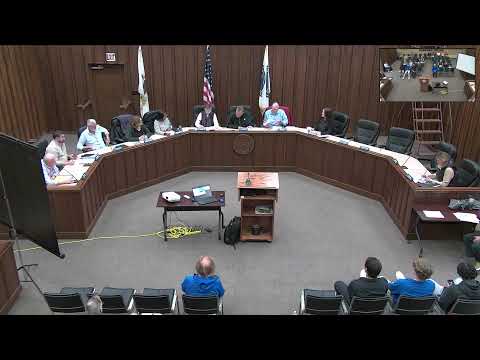
Andrew Masham, a student at Illinois College, presented a Design for America studio proposal to the Jacksonville City Council for a transitional housing pilot that would use recycled shipping containers on a sample site on Lynette Lane. The students recommended a medium-barrier program with requirements such as sobriety and participation in an exit plan and described a phased, developer-led deployment rather than a city-led construction effort.
The presentation said the project site identified in the simulation is privately owned by Samuel Holmes and would require rezoning. The students reported vendor research that identified Compact Living as their preferred supplier. Unit dimensions would be approximately 20 feet by 8 feet and include a restroom, living/kitchen area and sleeping space. The students presented vendor price benchmarks of about $22,900 per turnkey unit, with possible bulk discounts near $18,900, and noted electrical work could add about $8,000 per unit.
Site-infrastructure estimates presented with Benton Engineering input included water-main upgrades (estimated about $184,000), sewer-service work (about $44,000) and non-construction costs of roughly $46,000, for a subtotal the students summarized as about $274,000 (they noted electrical was not yet included in that total). The team said initial deployment could be a small pod of 6–8 units with later expansion to roughly 10–20 units depending on demand and available space; they described rapid deployment logistics (flatbed delivery, crane set-down and utility hookups).
When council members asked who would fund and build the project, presenters and Dr. Charles Riggs said the concept assumed a private developer would procure and construct the units and coordinate phases; the class was presenting a simulation and would not build the development itself. The students said they surveyed the Illinois College community (about 26 responses) and used that feedback in their design process.
The presentation included supporting elements such as a small dog park, community garden space and ADA-accessible pathways. Presenters thanked Benton Engineering and Dr. Riggs for assistance and invited further questions and follow-up with staff and potential developers.