Lifetime Citizen Portal Access — AI Briefings, Alerts & Unlimited Follows
Houston County Board denies Hoka cannabis‑microbusiness setback variance after extensive public comment
Loading...
Summary
After extended public comment from school staff, parents and residents concerned about proximity to Saint Peter’s School, the Houston County Board of Adjustment denied a variance request from Adam Steele for reduced setbacks for a proposed cannabis microbusiness in Hoka; the denial passed in a 5‑0 roll‑call vote.
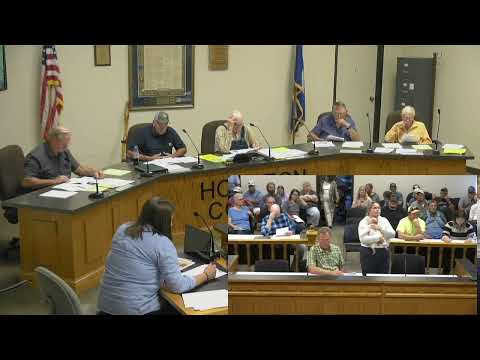
The Houston County Board of Adjustment on Sept. 24 denied a variance that would have reduced the required setbacks for a proposed cannabis microbusiness in the city of Hoka. Applicant Adam Steele sought two variances to reduce state‑allowed local setbacks from 1,000 feet (school) and 500 feet (public park/athletic field); staff calculated the applicant’s requested setbacks at roughly 625 feet to the school and 160 feet to the park.
The hearing brought substantial public comment from Saint Peter’s School staff, parents and many Hoka residents who said the proposed shop would sit on children’s regular walking routes and next to a library, daycare and ball diamond. Gary Van Damelen, speaking on behalf of the parish and the school, said the Hoka city council opposed the location and urged the county to honor that stance. "We don't want this stuff around our kids," Van Damelen said. Saint Peter's teacher Rachel Dejarlis urged the board to follow the ordinance and consider tabling until nearby communities’ experiences are available.
Applicant Adam Steele described his business, Elemental, as medicine‑focused and said he plans to open initially as a medical dispensary, to operate strict ID checks and to train staff on "informed choices" and responsible use. Steele told the board he has invested about $10,000 so far and said he plans local charitable donations. "Normalizing cannabis in a safe and welcoming space delivering positive experiences," Steele said when outlining his mission and educational approach.
Staff reviewed county code and the Office of Cannabis Management rules that allow local time/place/manner restrictions. Staff also clarified how setback measurements are taken (building to closest property line) and noted the consequence that, as drawn, the parcel falls short of the county setbacks. When staff read the standard variance findings, the board recorded split votes on individual findings — several members voted that findings related to public health and safety (findings 2 and 5) were not met.
A board member moved to deny the variance because required findings had not been satisfied. The board then took a roll‑call vote on denial: Dean Hoppell — Yes; Wayne Runigan — Yes; Franklin Hahn — Yes; Ken Anderson — Yes; Ken Visker — Yes. The motion to deny carried and the variance request was denied.
Next steps: staff and board members discussed possibly drafting proposed changes to the county zoning ordinance and waiting for further state rulemaking before taking substantive code changes. The applicant may pursue locating elsewhere or pursue an ordinance change through the planning commission and county commissioners.