
Newcastle planning commission moves to tighten stream protections, plans January hearing
Get AI-powered insights, summaries, and transcripts
Sign Up Free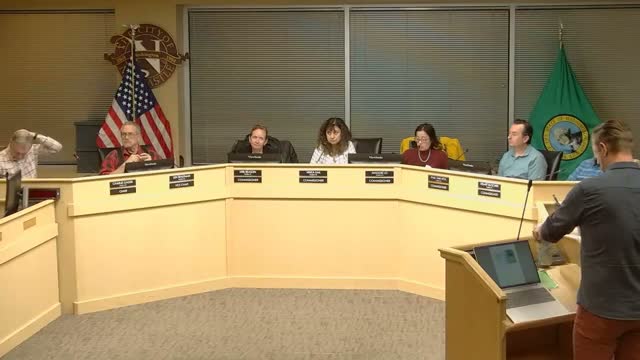
Summary
The commission reviewed a 'best available science' addendum that would widen riparian buffers (proposed 150 feet for fish-bearing streams, 100 feet for smaller streams), discussed nonconforming-structure allowances to reduce homeowner hardship, and agreed to a January public hearing and February council recommendation after GIS mapping of affected parcels.
Newcastle — The Newcastle Planning Commission spent the bulk of its Dec. 17 meeting reviewing proposed updates to the city's Critical Areas Ordinance intended to align local stream protections with recently updated state guidance.
Consultant Doug (introduced by staff) summarized a 'best available science' addendum for fish and wildlife habitat conservation areas and described two approaches to riparian buffers: the state's site-potential-tree-height method and the city's traditional water-type predictive model. "Best available science is a key requirement in Washington state law," he told the commission, and warned that applying the site-potential-tree-height method could dramatically increase the number of fully encumbered parcels compared with current standards.
The consultant and staff presented an option that blends approaches: adopting larger buffers for fish-bearing streams (roughly 150 feet using a 75% site-potential-tree-height marker) and a 100-foot minimum for smaller perennial or seasonal streams to protect water-quality functions. The consultant's draft GIS analysis showed the number of fully encumbered parcels rising from about 37 under the city's current buffers to over 1,000 under a full site-potential-tree-height application.
Commissioners repeatedly raised homeowner-impact concerns and asked about tools to lessen effects on existing development. Director Fitzgibbons and the consultant identified flexibility measures under consideration, including interrupted buffers where rights-of-way or existing development reduces the effective buffer, buffer averaging on-site, and strengthened nonconforming-structure rules that would allow certain maintenance and limited expansion within previously disturbed areas. Director Fitzgibbons said staff is drafting nonconformance language to help homeowners "maintain their home" while meeting environmental objectives.
Several commissioners suggested documenting any local departures from state guidance if the city elects to retain smaller buffers in certain places. The consultant explained that state guidance permits a jurisdiction to depart from best available science only if the record documents the legal, social, cultural, economic or political considerations and demonstrates how critical-area functions and values will be maintained.
Because of statutory timing pressures and upcoming grant deadlines, staff proposed — and the commission agreed — to hold a public hearing in January with a view toward voting on a recommendation to city council in February. "So we'll put on a public hearing next month," Director Fitzgibbons said. Staff also committed to producing public-facing GIS maps so property owners can see how alternative buffer options would affect parcels.
The commission did not adopt new buffer standards at the meeting; it directed staff to publish mapping, continue outreach and return with the red-lined code and a public hearing in January. The council is expected to consider the commission's recommendation in mid-February.