Lifetime Citizen Portal Access — AI Briefings, Alerts & Unlimited Follows
Legislative Audit Commission approves four 2026 program evaluations including autism services and nursing home oversight
Loading...
Summary
The Legislative Audit Commission and its evaluation subcommittee on Nov. 17 recommended and unanimously approved four program-evaluation topics for 2026: autism services in public schools; DHS Office of Inspector General investigations; the Taxpayers Transportation Accountability Act; and state regulation of nursing home care. Members discussed scope and timing for each topic.
The Legislative Audit Commission on Nov. 17 agreed to direct the Office of the Legislative Auditor (OLA) to pursue four program evaluations in 2026: autism spectrum disorder services in public schools; investigations conducted by the Department of Human Services Office of Inspector General (OIG); the Taxpayers Transportation Accountability Act (TTAA); and state regulation of nursing home care. The evaluation recommendation came from the commission’s evaluation subcommittee and was approved unanimously by both the subcommittee and the full commission.
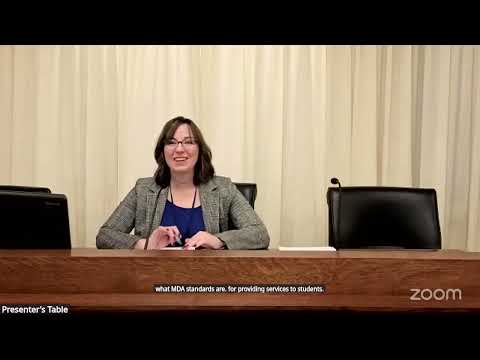
"For the record, my name is Jody Munson Rodriguez. I'm the deputy legislative auditor for LLA's program evaluation division," said Jody Munson Rodriguez, introducing the packet and the OLA's assessment of ten semifinalist topics. The subcommittee's task was to review background papers and pick four semifinalist topics to recommend to the full commission.
Senator Rest moved the recommendation after members discussed OLA's written 'most promising' rankings. "That is the autism spectrum disorder services and the DHS office of inspector general investigation, the taxpayers' transportation accountability act, and state regulation of nursing home care," she said when making the motion to select the top four items from OLA's assessment. The subcommittee's roll-call vote was unanimous; the full commission subsequently repeated a unanimous roll-call vote to adopt the recommendation.
Why it matters: OLA program evaluations provide lawmakers and the public an independent review of whether state programs are meeting policy goals and using public resources efficiently. The four topics address areas of ongoing public concern—special-education services, oversight of fraud and abuse investigations at DHS, implementation of transportation accountability legislation, and the quality and regulation of nursing home care.
What members discussed
Autism services in public schools: OLA staff told members the number of students designated as having autism has increased and state resources devoted to those services have grown; OLA said it could evaluate quality and appropriateness of services and, if requested, examine how the Minnesota Department of Education determines eligibility and designations. Representative Anderson asked whether the review would examine in-school services versus outside providers and whether OLA could probe the reported increase in autism designations; Munson Rodriguez said the office could scope an evaluation to study MDE standards and whether they align with national best practices.
DHS OIG investigations: OLA described a straightforward evaluation of the OIG’s policies and procedures for handling complaints alleging fraud or abuse and for identifying and investigating potential misconduct. Representative Anderson urged moving this early in the year, noting ongoing statewide conversations about inspector-general functions.
Taxpayers Transportation Accountability Act (TTAA): The commission heard that TTAA oversight is feasible and useful; members framed the potential evaluation as a check on whether MnDOT is meeting the law’s goals and whether decision-making appropriately balances internal and external expertise.
State regulation of nursing home care: OLA noted nursing home care is a large field and would require scoping; the office suggested focusing on targeted questions such as how change of ownership affects quality and how licensing and survey schedules operate. David Kirschner of OLA confirmed assisted-living facilities are surveyed every two years and that complaint-triggered visits occur more frequently.
Other semifinalist topics: OLA discussed additional semifinalist topics in the packet—including enterprise talent development, Lessard-Sams Council (LCCMR) oversight questions, MnDOT worksite safety inspections, nonemergency medical transportation, waiver-reimagine efforts at DHS, and state oversight of long-term care insurance—and highlighted timing or scope issues for several (for example, NEMT was judged not timely because 2025 legislation will change delivery models).
Staff and auditors’ notes
Judy Randall, legislative auditor, told the commission OLA is "finishing up right now a financial audit looking at the Department of Natural Resources oversight of Outdoor Heritage Fund money," work that addresses questions similar to those members raised about LCCMR and post-authorizing oversight.
Votes and next steps
The subcommittee voted by roll call to recommend the four topics to the full Legislative Audit Commission; the full commission then took a roll-call vote and passed the motion unanimously. OLA will move forward with scoping and planning the approved program evaluations for 2026, returning to the commission with statements of work, timelines, and any resource needs as appropriate.
The commission adjourned after the vote.