Lifetime Citizen Portal Access — AI Briefings, Alerts & Unlimited Follows
Senate committee hears bill to speed and clarify refuse-utility rate filings
Loading...
Summary
At an April 21 introductory hearing, the Senate Community & Regional Affairs Committee heard SB 16, presented by Dawson Mann for Senator Myers, which would allow already‑regulated refuse utilities to use a simplified rate‑filing process and require the Regulatory Commission of Alaska to adopt refuse‑specific rules and mandatory public notice.
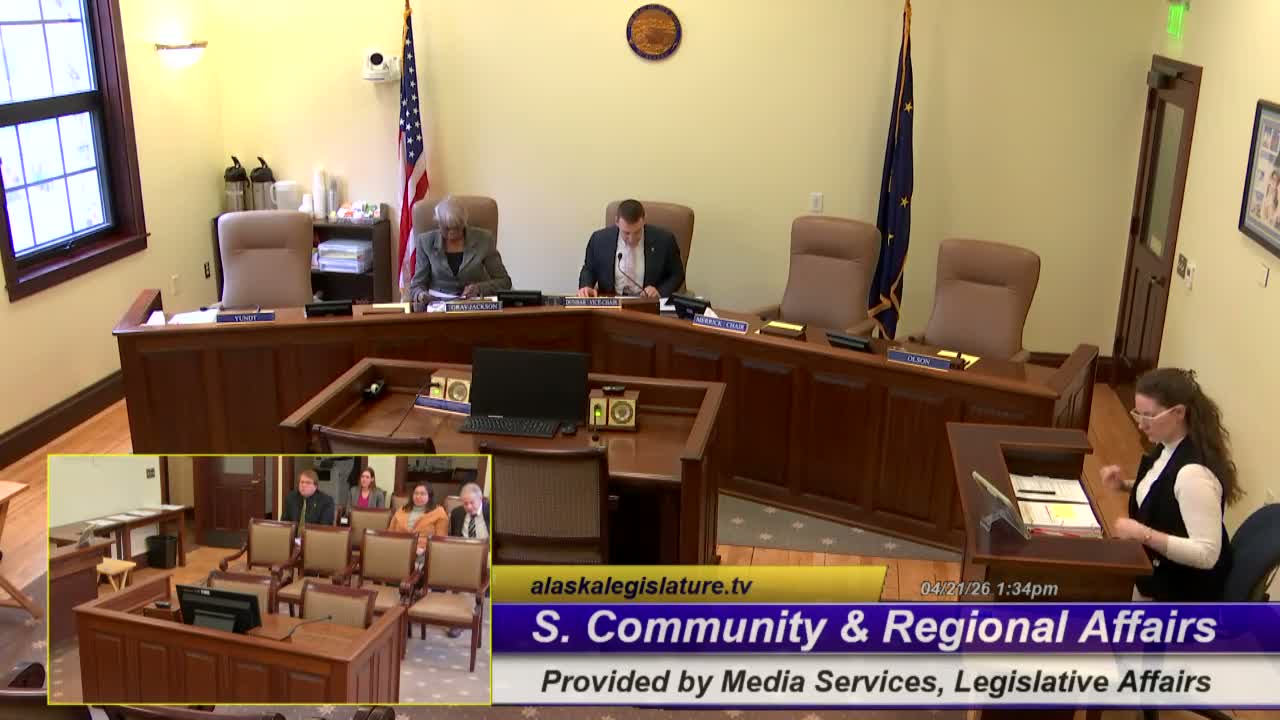
The Alaska Senate Community & Regional Affairs Committee on April 21 held an introductory hearing on Senate Bill 16, a measure to streamline how refuse utilities seek rate increases. Dawson Mann, chief of staff to Senator Myers, presented the bill and described it as an attempt "to balance two things, protecting customers and making sure that rate cases are handled on time." The bill would allow refuse utilities already subject to the Regulatory Commission of Alaska (RCA) to use an existing simplified rate‑filing procedure so long as they meet specified thresholds and rules, Mann said.
Mann read the sectional analysis for the committee, explaining that the bill would amend state statute to include refuse utilities in the simplified rate process and direct the RCA to adopt regulations tailored to refuse utilities that provide "sufficient public notice and time for rate filers to meaningfully comment." Mann also noted the measure includes an immediate effective date for the statutory change.
Kurt Froning, division vice president for Waste Connections (Alaska Waste), testified in support, urging a more efficient, Alaska‑specific approach and arguing that lengthy, expensive rate cases ultimately raise costs for customers. "This process is especially challenging for small and rural solid waste providers," Froning said, adding that protracted proceedings can cost utilities "hundreds of thousands of dollars" in legal and consulting fees that are ultimately borne by ratepayers. He recommended expanded use of simplified filings, pre‑filing education and training for RCA audit staff, and earlier informal communications to resolve issues before formal disputes arise.
RCA representatives on the call told the committee they were present to answer questions but cautioned that the commission cannot take a legislative position until the matter is publicly considered at an RCA meeting in compliance with the Open Meetings Act (AS 44.62.310). The committee opened the record for public testimony but received no in‑room or online comments. With no objections, the committee set the bill aside for future consideration.
Why it matters: SB 16 would not change which refuse utilities fall under RCA jurisdiction, committee members were told; instead, it would change the procedural path available to those utilities, shortening the calendar and—supporters say—reducing the cost and delay that can drive larger, less frequent rate requests. The bill would also make public notice statutory rather than discretionary, a change proponents argue would protect ratepayer interests while accelerating proceedings.
The bill was introduced as an informational hearing; there was no committee vote on the measure at this meeting. The committee accepted testimony and closed the public record for the day.