Get email alerts on the Board Votes topic
No spam. Unsubscribe anytime.
Board approves routine items, allows remote participation for supervisor
Summary
At its meeting the Solano County Board of Supervisors approved a request for remote participation, adopted a retirement resolution, approved the agenda and consent calendar, and adjourned to closed session to discuss litigation and labor negotiations.
The Solano County Board of Supervisors voted unanimously on a series of routine items and moved into closed session after its business session Thursday.
The board approved a request from Supervisor Williams to participate remotely while attending a California State Association of Counties (CSAC) conference. The motion to permit remote participation passed by roll call with four votes in favor and none opposed.
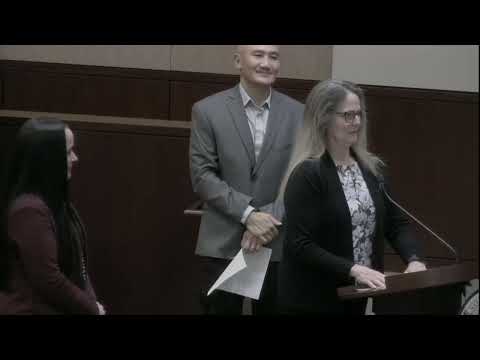
The board also adopted a resolution honoring Deborah “Debbie” Doolittle for 23 years of service in the Auditor-Controller’s payroll unit. The resolution, presented with a plaque, passed by a 4-0 roll call vote.
Other procedural actions included adoption of the meeting agenda and approval of the consent calendar; both were approved unanimously. The public portion of the meeting concluded with the chair adjourning to closed session to discuss anticipated litigation and labor negotiations under Government Code sections cited by the clerk.
Clerk of the board staff read the closed-session items into the record, including initiation of litigation under Government Code §54956.9(d)(4) and labor matters under Government Code §54957.6. The board indicated it did not expect a reportable action out of closed session.
The board scheduled its next meeting for December 9 at 9 a.m.
AI generated
The text on this page is AI generated. Summaries, highlights, analysis, and video transcripts are all produced from the original source material.
AI can make mistakes, so if you spot one, and we will fix it for everyone.
Note: the source content is unaltered by us. Any content source we link to, be it a video, an audio recording, or a document, is presented exactly as its publisher released it. That publisher is usually a government body, sometimes an individual official or another organisation.