Get Full Government Meeting Transcripts, Videos, & Alerts Forever!
Get email alerts on the Displacement Statistics topic
No spam. Unsubscribe anytime.
UNHCR chief: global displacement remains high though Syria shows signs of return
Summary
Filippo Grandi told UN podcast listeners that while global displacement remains at an estimated 117 million people, recent data show slight declines driven partly by returns to Syria and forced returns of Afghans; he cited conflict, political paralysis and climate change as primary drivers.
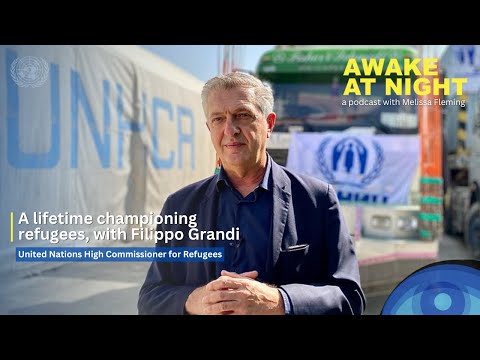
Filippo Grandi, the United Nations High Commissioner for Refugees, said the global number of displaced people remains "a huge figure" at about 117,000,000, though the latest UNHCR figures show a small dip for the first time in a decade.
On the United Nations podcast Awake at Night, Grandi attributed the broad rise in displacement over recent years to a failure of political solutions and the accumulation of unresolved conflicts. "We have become a world incapable of making peace," he said, pointing to paralysis in bodies such as the Security Council as part of the problem.
He also identified climate change as a growing driver of conflict and displacement and warned that the international debate about climate and security was not encouraging.
Grandi said the modest recent decrease in the UNHCR tally was driven by two primary factors: forced returns of some Afghans from Iran and Pakistan, and returns in Syria. He cited roughly 1,000,000 people who returned from neighboring countries to Syria and more than 2,000,000 who returned internally within Syria since a political shift there.
The high commissioner cautioned that returns do not equal durable peace: "Syria is still very fragile," he said, and returns occur even before full political settlements are in place. He urged that when an opportunity for peace appears, the international community should seize it to enable sustainable reintegration.
Grandi emphasized that most refugees remain close to their home countries and that resettlement or local integration are important solutions when return is impossible. "Home means your house, your family, your friends, your work, your school," he said.
The interview did not include independent verification of the figures cited; Grandi presented UNHCR's numbers and his interpretation of trends.