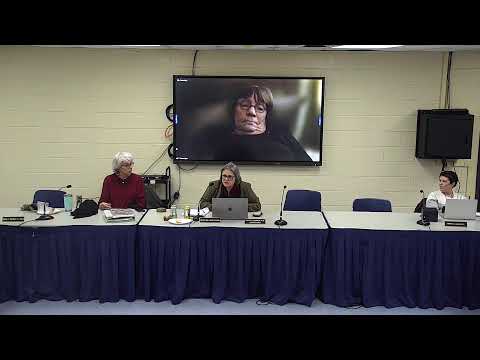
NHS students tell school committee bathroom closures are disrupting instruction
Loading...
Summary
Student Advisory Council presented data and firsthand accounts of frequent bathroom closures, vaping and vandalism at Northampton High School, and urged a digital hall‑pass pilot and staffing changes to reduce lost class time.
Student leaders told the Northampton School Committee on Dec. 11 that repeated bathroom closures and long waits at Northampton High School are causing students to arrive late or miss class.
"Many students are arriving late to class and or missing large chunks of class leading to gaps in information," said Edie Adams Cernall, a sophomore at NHS, introducing the Student Advisory Council's presentation on bathroom access. Students said closures are most frequent in the 2nd‑floor boys’ room and sometimes leave only one working bathroom for an entire gender, leading to congestion and opportunities for skipping and substance use.
The students identified four main causes: vandalism, drug use (especially vaping), heavy traffic during passing times and limited ability to monitor stalls. "Because of the lack of cameras, there's also an ability to skip while in the bathroom," one presenter said, noting cameras are not an option inside stalls.
Superintendent Dr. Diane Bonner and other administrators told the committee they have seen an increase in vaping incidents this year and said staffing constraints limit monitoring. Diane Zamer, who was on Zoom, said campus monitors are often reassigned to cover other responsibilities, leaving gaps in hallway and bathroom supervision.
The presenters urged several changes: more attentive hall monitors, consistent teacher enforcement of bathroom‑pass time limits, and a standardized policy across classrooms. They also described a planned pilot of a digital hall‑pass system called SmartPass that would log who leaves class, cap the number of students permitted in a bathroom and produce usage data for targeted interventions. Students raised practical concerns about piloting the system in classes such as band and about Chromebook availability for kiosk use; administrators said kiosk options and use of district MCAS devices are being explored.
Committee members asked for concrete data. The students acknowledged they had not always collected formal incident sources and said some statistics came from advisors; administration agreed to provide updated incident data and to continue working with the students on monitoring and pilot design.
The committee did not take a formal vote on the presentation; members thanked the students for bringing the issue forward and asked staff to return with data and pilot plans.
The committee is expected to continue work on staffing and pilot logistics in early 2026.