Lifetime Citizen Portal Access — AI Briefings, Alerts & Unlimited Follows
House Rules Committee approves rule to send NDAA, Invest Act and three energy bills to the floor
Loading...
Summary
The House Rules Committee on Dec. 12 voted 9–3 to report a structured rule sending the FY2026 NDAA, the Invest Act and three energy bills to the House floor. Debate focused on IVF and collective-bargaining language in the NDAA, grid reliability and state water-permitting authority, and investor protections in the Invest Act.
The House Rules Committee voted to report a package of measures to the House floor, approving a structured rule that provides debate time and amendment procedures for six bills, including S.1071 (the FY2026 National Defense Authorization Act), HR 3,383 (the Invest Act), HR 3,628 (state planning for reliability and affordability), HR 3,638 (Electric Supply Chain Act), HR 3,668 (Improving Interagency Coordination for Pipeline Reviews Act) and the Permit Act.
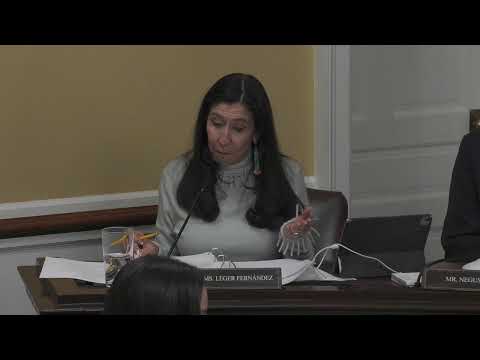
The motion to report the rule was offered by Mr. Scott and carried after multiple recorded and voice votes. The committee recorded a final roll-call result of 9 yeas and 3 nays on the motion to report the rule. Chairwoman Fox announced the committee’s managers for the rule: Mr. Scott for the majority and Ms. Ledger Fernandez for the Democrats.
Debate at the Rules Committee highlighted several points likely to surface on the floor. Ranking Member McGovern repeatedly argued that the committee was “wasting time” on suspension bills while urgent health-care and affordability issues remain unaddressed. McGovern said the package contained items that “don’t really do much of anything” and flagged concerns about defense spending levels in the NDAA.
Supporters said the package includes consequential items. Chairman Rogers, testifying on the NDAA, described a set of acquisition reforms intended to speed procurement and called attention to a 3.8% pay raise for service members and nearly $3 billion in construction for housing and family facilities. Representative Latta and other energy bill proponents emphasized the bills’ goals of improving grid reliability and speeding permitting and interagency reviews to lower costs and secure supply chains.
Opponents pointed to three main flashpoints that shaped floor-level contestation: first, members from both parties asked why provisions included earlier in House and Senate versions — including IVF access for service members and statutory protections for civilian Defense Department collective bargaining — were omitted from the final NDAA package. Second, Democrats and some Republicans warned that pipeline and permitting bills could undercut states’ Clean Water Act authority and raise costs by elevating certain dispatchable generation sources over cleaner alternatives. Third, Democrats on Financial Services described portions of the Invest Act as weakening protections for retirement accounts and exposing retail investors to opaque private-asset risks.
The committee considered multiple amendment motions on these subjects during the session; several were rejected on voice or recorded votes. After resolving the amendment calls, the committee approved the motion to report the rule and adjourned.
What happens next: The rule reported by the committee governs floor consideration. Members who opposed the rule signaled they will press their amendments and messaging on the House floor, particularly on IVF coverage, collective-bargaining protections in the NDAA, water-permitting language and investor protections in the Invest Act.