Trustees debate open vs. closed high-school campus rules; administration to clarify parental authorization methods
Summary
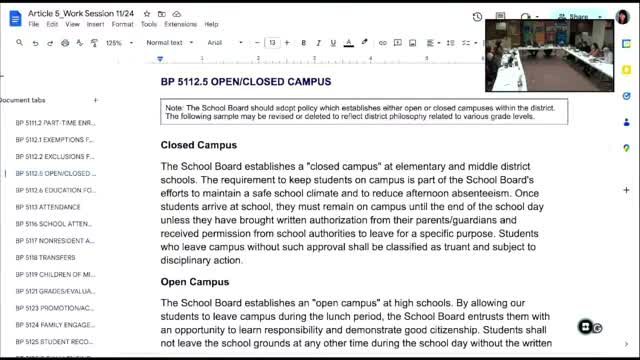
The board reviewed a new open/closed campus policy codifying existing practice; trustees split on whether to keep open lunch privileges (citing student responsibility and limited building capacity) and asked administration to clarify whether parental consent can be given by phone or must be written; administrators said sign-out sheets count as written authorization but will review practical options.
Miss Dillard presented a new open/closed campus policy for the district; she said the draft codifies past practice (the district had procedures but no formal policy). The policy would set criteria and authorization rules for students leaving campus during the school day (for lunch or free periods).
Trustees debated trade-offs. Miss Julian said she favors a closed campus based on supervision concerns and recalled her high-school experience moving from open to closed campus. Other trustees including Miss Maple and Miss Gillum argued open campus can teach responsibility and that facilities, cafeteria capacity and scheduling historically shaped the choice to keep an open campus in some schools.
Miss Hall asked whether the draft's requirement that students bring "written authorization from their parents/guardians" was practical; she suggested parents often prefer phone calls or other consent methods. Administration said written authorization can be satisfied by a signed sign-out sheet at the front office but acknowledged that may be a barrier and said they would examine alternative consent methods (such as documented phone consent procedures) for clarity.
Board members also asked about routine exceptions (free periods and work-experience placements), which administrators said would remain part of individualized school plans and not require a separate written authorization.
Next steps: Administration will review the authorization language to offer practical consent options and return the refined policy for the board's consideration.